Struggling with slow internet in some parts of your home? You’re not alone.
Poor wifi coverage can turn simple tasks into frustrating challenges. But what if you could fix this without breaking the bank? This budget-friendly mesh wifi coverage guide is made just for you. It will show you how to boost your signal, enjoy faster speeds, and say goodbye to dead zones—all while keeping costs low.
Keep reading to discover easy tips and smart solutions that make powerful, reliable wifi a reality in every corner of your space.
Choosing Affordable Mesh Wifi Systems
Mesh wifi systems help cover your home with strong wifi signals. Choosing a budget-friendly system saves money without losing quality.
Many brands offer affordable mesh wifi with good features. You can find the right system by comparing key points.
Top Budget Brands
Some brands focus on affordable mesh wifi systems. They give good coverage and speed at lower prices.
- TP-Link
- Netgear
- Google Nest Wifi
- Amazon Eero
- Tenda
Key Features To Look For
Look for features that make mesh wifi work well. These help keep your connection strong and stable.
- Easy setup and app control
- Good coverage area
- Strong signal speed
- Number of units in the package
- Security options like WPA3
- Compatibility with your devices
Comparing Price And Performance
Price does not always mean better performance. Some affordable systems offer good speed and coverage.
| Brand | Price Range | Coverage Area | Max Speed |
|---|---|---|---|
| TP-Link Deco | $100 – $200 | Up to 5,500 sq ft | Up to 1200 Mbps |
| Netgear Orbi | $150 – $250 | Up to 6,000 sq ft | Up to 1750 Mbps |
| Google Nest Wifi | $150 – $220 | Up to 4,400 sq ft | Up to 1200 Mbps |
| Amazon Eero | $120 – $250 | Up to 5,000 sq ft | Up to 900 Mbps |
| Tenda Nova | $90 – $150 | Up to 4,000 sq ft | Up to 1200 Mbps |

Credit: www.reddit.com
Optimizing Placement For Best Coverage
Placing your mesh WiFi nodes correctly helps you get strong signals everywhere. Good placement reduces dead spots and improves speed.
This guide shows easy ways to set up your mesh system for the best coverage in your home.
Ideal Node Locations
Place nodes in open areas, not inside cabinets or behind furniture. Keep them away from walls that block signals.
Try to spread nodes evenly through your house. Each node should be close enough to connect well with the main router.
- Use central spots in each room for nodes
- Place nodes at about chest height for better signal
- Keep nodes visible and not hidden behind objects
- Avoid placing nodes on the floor
Avoiding Signal Interference
WiFi signals can be blocked by many things. Electronics, walls, and metal objects cause interference. This lowers your WiFi speed.
Keep mesh nodes away from devices like microwaves, cordless phones, and baby monitors. These devices use similar frequencies.
- Do not place nodes near thick walls or metal surfaces
- Keep at least one meter distance from electronic devices
- Avoid placing nodes near large mirrors or fish tanks
- Use 5 GHz band for less interference if possible
Using Floor Plans Effectively
Use your floor plan to plan node placement. Mark where walls, doors, and furniture are. This helps find the best spots for nodes.
Place nodes so signals can move freely between floors. Avoid placing nodes directly above each other on different floors.
- Draw your home layout on paper or use apps
- Mark node locations to test signal strength
- Adjust node spots based on signal test results
- Place nodes near staircases for better floor coverage
Maximizing Speed On A Budget
Getting fast wifi at home does not need to be expensive. Mesh wifi systems can help spread wifi evenly. You can improve speed without spending a lot.
Smart choices and small tweaks make a big difference. This guide shares tips to get the best speed for less money.
Firmware And Software Updates
Keep your mesh wifi devices updated with the latest software. Updates fix bugs and improve device performance. This helps keep your speed steady.
Check for updates regularly in your device app or web portal. Some systems can update automatically at night to avoid downtime.
Channel Selection Tips
Wifi channels can get crowded if many networks use the same one. Picking a less busy channel reduces interference and boosts speed.
Use free wifi analyzer apps to find open channels. Choose the best channel for both 2.4 GHz and 5 GHz bands to improve coverage.
- Scan channels during different times of day
- Avoid channels used by many neighbors
- Switch channels if speed drops
Balancing Speed And Range
Increasing wifi speed can reduce range, and wider range may lower speed. Find a balance that fits your home size and needs.
Place mesh nodes where they get strong signals but still cover all rooms. Avoid putting nodes too far apart or near walls that block signals.
- Place main router in a central spot
- Put nodes in open areas, not corners
- Test speed in different rooms and adjust
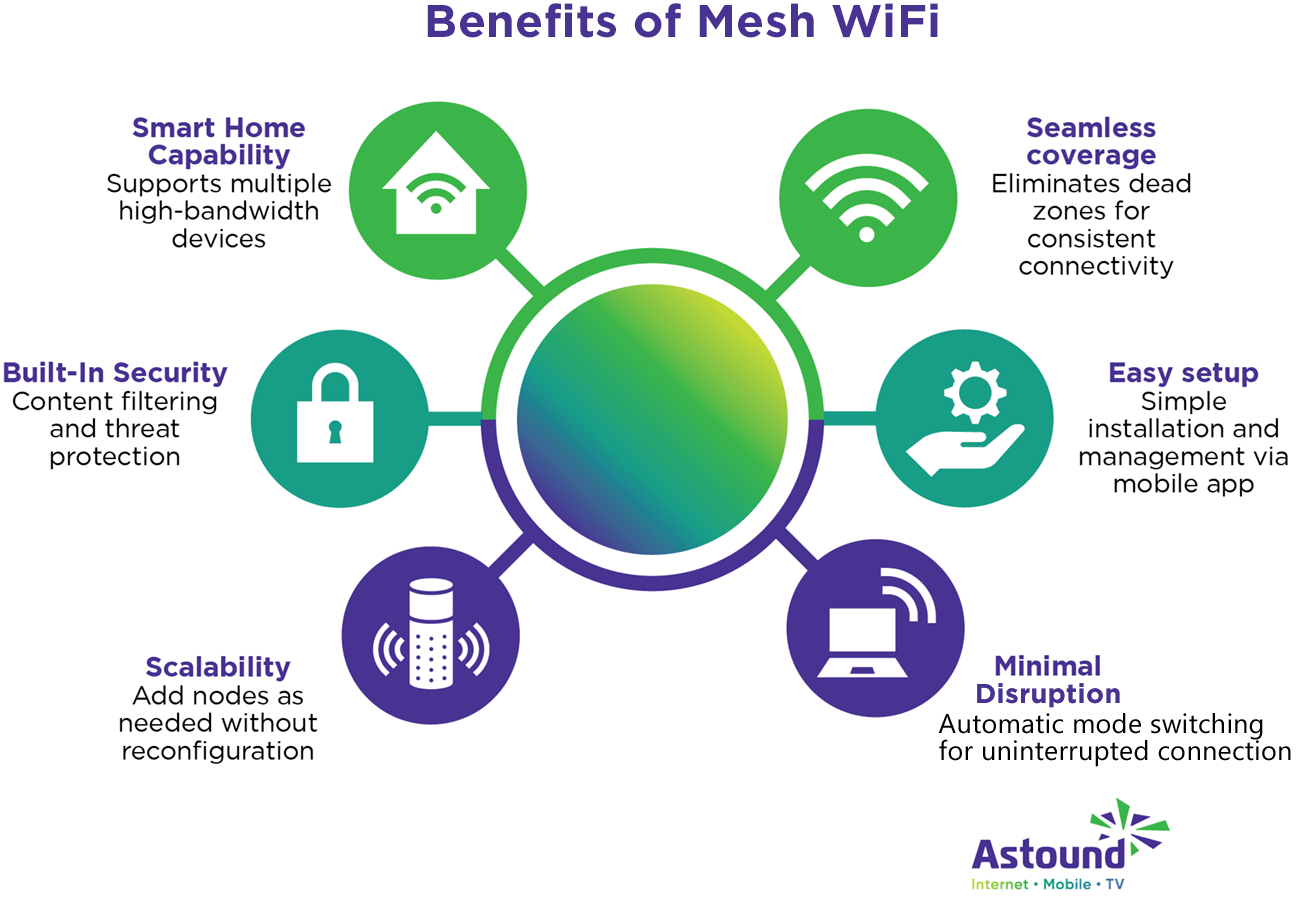
Credit: www.astound.com
Extending Range Without Extra Cost
Mesh WiFi systems help cover larger areas with internet. Sometimes, you want better coverage without spending more money.
This guide shows simple ways to boost your WiFi range using things you already have.
Diy Antenna Adjustments
Changing your router’s antenna position can improve signal strength. Point antennas vertically for better horizontal coverage.
You can also make simple reflectors from aluminum foil. Place them behind antennas to direct signals toward weak areas.
- Adjust antennas to face the area you want to cover
- Create small reflectors using aluminum foil and cardboard
- Avoid placing antennas near metal objects or walls
Utilizing Existing Hardware
Old routers can work as extra mesh nodes or WiFi extenders. Set them up with open-source firmware to expand your network.
Use Ethernet cables to connect these devices for better speed and stable connections.
- Use old routers as WiFi access points
- Connect devices with Ethernet cables where possible
- Check if your old device supports mesh or extender modes
Powerline Adapters As Alternatives
Powerline adapters send internet signals through electrical wiring in your home. They help reach areas with weak WiFi.
These adapters plug into wall sockets and connect to your router and device using Ethernet cables.
- Plug one adapter near your router
- Plug the second adapter where you need better internet
- Use Ethernet cables to connect adapters and devices
- Check adapter compatibility with your home wiring
Troubleshooting Common Issues
Mesh WiFi systems help cover large areas with strong internet signals.
Sometimes, problems like dead zones or slow connections can happen.
Dealing With Dead Zones
Dead zones are areas with weak or no WiFi signal. These happen when a mesh node is too far from others.
- Move nodes closer to each other for better coverage.
- Place nodes in open areas, away from thick walls or metal objects.
- Avoid placing nodes near microwaves or cordless phones.
- Use a WiFi analyzer app to find weak signal spots.
Fixing Slow Connections
Slow WiFi can make browsing and streaming frustrating. It may be caused by many devices or interference.
| Cause | Fix |
| Too many devices | Limit devices or upgrade your internet plan |
| Signal interference | Move nodes away from electronics and large metal objects |
| Old router firmware | Update the firmware regularly |
| Distance from nodes | Place nodes closer or add more nodes |
Reset And Reconfigure Tips
Resetting your mesh system can clear issues. After reset, you need to set it up again.
- Power off all mesh nodes before reset.
- Press and hold the reset button for 10 seconds.
- Use the app or web interface to reconfigure settings.
- Place nodes in recommended spots for best coverage.
- Check for firmware updates after setup.

Credit: www.pcmag.com
Smart Home Integration On A Budget
Creating a smart home does not need to be expensive. A mesh WiFi system helps connect all your smart devices easily. It ensures smooth integration without spending a lot.
This guide will show you how to use mesh WiFi for seamless smart home integration. You will learn to connect devices, manage network traffic, and secure your network.
Connecting Devices Seamlessly
Mesh WiFi helps connect many devices at once. Your smart home gadgets work better with good WiFi coverage. Place mesh nodes in key spots to cover your whole home.
Each node communicates with others to provide strong signals. This lets devices switch smoothly between nodes. Your smart gadgets stay connected without interruptions.
- Place nodes in open areas
- Avoid placing nodes near metal objects
- Test signal strength in different rooms
Managing Network Traffic
Mesh networks manage traffic efficiently. They allocate bandwidth based on device needs. This ensures that all devices get the right amount of data without slowing down.
Use your mesh app to monitor network performance. Set priorities for devices that need more speed. This helps in keeping your smart home running smoothly.
- Monitor device data usage
- Adjust bandwidth for critical devices
- Schedule updates during low-usage times
Security Tips For Mesh Networks
Securing your mesh network is important. Use strong passwords and update your network regularly. This protects your smart devices from unauthorized access.
Enable network encryption for added security. Keep an eye on connected devices and remove unknown ones. This keeps your smart home safe and secure.
- Change default passwords
- Enable WPA3 encryption
- Regularly check connected devices
Frequently Asked Questions
What Is Mesh Wifi And How Does It Work?
Mesh WiFi uses multiple nodes to create a seamless network. Nodes communicate to extend coverage and reduce dead zones. This system ensures stable connections across large areas, ideal for homes needing budget-friendly, reliable internet coverage.
How To Choose Budget-friendly Mesh Wifi Systems?
Look for systems offering good coverage, speed, and easy setup. Check reviews for performance and value. Opt for brands with reliable customer support. Avoid unnecessary features to keep costs low while maintaining strong WiFi signals.
Can Mesh Wifi Improve Slow Internet Speeds?
Yes, mesh WiFi can boost speeds by reducing dead zones. It distributes internet efficiently across your home. However, overall speed also depends on your internet plan and provider quality.
Is Mesh Wifi Better Than Traditional Routers?
Mesh WiFi offers better coverage and fewer dead zones. Traditional routers may struggle in large or multi-story homes. Mesh systems are scalable, budget-friendly, and easier to manage, providing consistent signal strength everywhere.
Conclusion
Choosing the right mesh WiFi system saves money and boosts your signal. Small steps make a big difference in coverage at home. Place nodes wisely for the best connection in every room. Simple setups can fix slow or spotty internet easily.
Enjoy steady WiFi without spending too much. Start with what fits your budget and needs best. Good coverage helps with work, school, and streaming fun. A strong, affordable mesh network keeps you connected all day.