Are you tired of slow Wi-Fi and dead zones in your large home? You might be wondering if a mesh Wi-Fi system is better than sticking with a single router.
Choosing the right setup can make a huge difference in how you stream, work, and connect with your devices. You’ll discover which option delivers stronger signals, wider coverage, and smoother internet throughout your entire space. Keep reading to find out what’s best for your home and how to get the most reliable Wi-Fi experience possible.

Credit: www.pcmag.com
Challenges Of Wifi In Large Homes
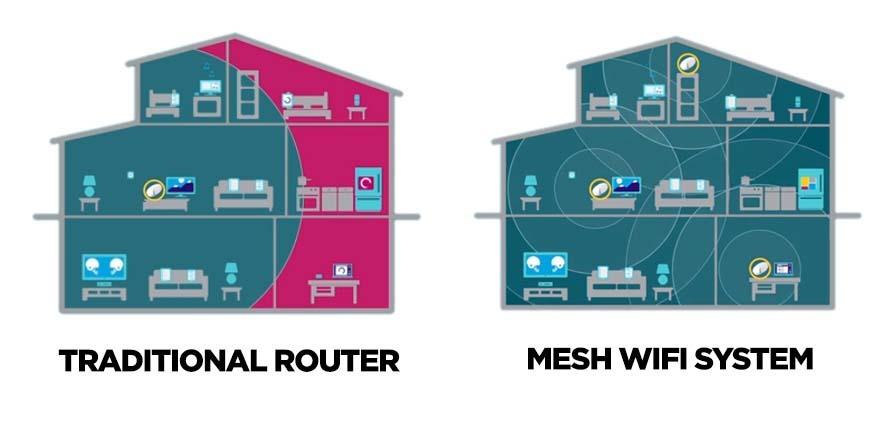
Wifi in large homes often faces dead zoneswhere the signal is weak. These spots can be in basements, behind thick walls, or far from the router.
Signal interference is another common issue. Devices like microwaves, cordless phones, and walls can block or weaken wifi signals. This causes slow internet or dropped connections.
Single routers have limited coverage. They may not reach all rooms or floors in a big house. This leaves some areas without a strong wifi signal.
Here’s a quick look at issues with single routers:
| Challenge | Effect |
|---|---|
| Limited Range | Wifi does not cover large areas well |
| Signal Blockage | Walls and furniture reduce signal strength |
| Interference | Other devices cause slow or lost connection |
| Speed Drops | Distance from router reduces internet speed |
Credit: kb.pineapple.net.au
How Mesh Wifi Works
A mesh wifi system uses several devices called nodes. These nodes work together to cover large homes with wifi. Each node connects to others, creating a networkthat spreads signals far and wide. This setup helps avoid dead zones.
- Main router:Connects to the internet and controls the network.
- Satellite nodes:Placed around the home to extend wifi coverage.
- Backhaul connection:Links nodes to each other, making the network strong.
The mesh system provides seamless coverage. Devices switch between nodes automatically without losing connection. This keeps the internet steady when moving around the house.
Mesh networks are self-healing. If one node fails or loses signal, others adjust to keep the network working. This boosts reliabilityand reduces internet drops in big homes.
Advantages Of Mesh Wifi
Mesh Wifiuses multiple devices to cover large homes. This means better coveragewith fewer dead spots. Speed stays strong even far from the main router. Each device works together to keep your internet fast.
Setting up mesh wifi is simple. You can control all devices from one app. This makes managing your network easy for anyone. No need to be a tech expert.
Mesh wifi systems can grow with your needs. Add more devices anytime to cover new rooms or floors. This scalabilitymakes mesh wifi a smart choice for changing homes.
When A Single Router Suffices
A single routerworks well in smaller homes and apartments. The signal can cover most rooms without losing strength. This setup saves space and keeps things simple.
Budget considerationsmatter. Single routers cost less than mesh systems. For tight budgets, one good router is a smart choice. It gives decent speed and coverage for less money.
Simple network needs fit well with a single router. Few devices, light internet use, and basic streaming don’t need complex setups. One router can handle these tasks easily.
Comparing Performance Metrics
Mesh WiFi often provides better coverage and fewer dead zones in large homes than a single router. It balances speed and connection strength across multiple devices more effectively. Performance metrics show mesh systems reduce signal dropouts and improve overall network stability.
Speed And Bandwidth Tests
Mesh WiFi systems provide faster speeds across large areas. A single router struggles with speed when far away. Mesh WiFi uses multiple nodes. This helps maintain strong signals everywhere. Bandwidth is shared among devices. More nodes mean better sharing. Everyone enjoys fast internet.
Latency And Stability
Mesh WiFi offers lower latency in big homes. Signals stay strong and stable. A single router often has weak spots. These weak spots cause drops and lag. Mesh nodes keep connections smooth. They reduce interruptions for everyone.
Device Handling Capacity
Mesh WiFi handles many devices easily. Each node manages its own connections. A single router gets overloaded quickly. This leads to slowdowns and disconnects. Mesh systems distribute the load. This keeps performance high for all users.
Cost Factors To Consider
Initial investmentfor mesh WiFi systems is usually higher than a single router. Mesh kits often include multiple devices to cover large areas. Single routers cost less but may not cover every room well.
Long-term maintenancecan differ. Mesh systems need occasional updates on all nodes. Single routers require updates but fewer devices to manage. Mesh systems may need replacing parts if one node fails.
Value for moneydepends on your home size and needs. Mesh WiFi offers better coverage and fewer dead zones. Single routers might be enough for medium-sized homes. Think about how much coverage you really need before buying.
Tips For Choosing The Right Setup
Choosing the right wifi setup depends on your home’s size and layout. Mesh wifi covers large areas with strong signals, while a single router suits smaller spaces. Consider device numbers and budget before deciding.
Assessing Home Size And Layout
Big houses need more WiFi coverage. Mesh WiFi can cover large areas. It uses multiple nodes to extend the signal. A single router might not reach every corner. Think about where you need strong signal. Walls and floors can block signals. Mesh WiFi helps in big homes with thick walls.Identifying Internet Usage Patterns
Know how you use the internet. Do you stream movies or play games? Heavy usage needs strong and stable WiFi. Families with many devices need more bandwidth. Mesh WiFi can handle many devices. Single routers might struggle with many connections. Choose the setup that fits your usage.Future-proofing Your Network
Think ahead about your network needs. Technology changes fast. Mesh systems can easily expand. Add more nodes as needed. A single router might need replacing. Mesh setups adapt to new tech better. Plan for the future with a flexible network. `
Credit: www.reddit.com
Frequently Asked Questions
What Is The Difference Between Mesh Wifi And Single Router?
Mesh WiFi uses multiple devices to cover large areas. A single router relies on one device, which may cause weak signals in big homes. Mesh systems provide consistent coverage and reduce dead zones effectively.
Does Mesh Wifi Improve Coverage In Large Homes?
Yes, mesh WiFi improves coverage by using several nodes. Each node extends the network, ensuring strong signals throughout the home. This system prevents WiFi dropouts in distant rooms or floors.
Is Mesh Wifi Faster Than A Single Router?
Mesh WiFi can be faster in large homes. It reduces congestion by distributing devices across nodes. However, a high-quality single router might match speeds in smaller spaces.
How Easy Is Setting Up Mesh Wifi Compared To Routers?
Mesh WiFi systems are generally easier to set up. They often come with user-friendly apps for installation and management. Single routers may require manual configuration and technical knowledge.
Conclusion
Mesh WiFi often covers large homes better than a single router. It spreads the signal evenly to all rooms. Single routers may leave dead zones or weak signals. Mesh systems help devices stay connected without dropping. They also make managing your network easier.
For big houses, mesh WiFi usually offers a smoother online experience. Choosing the right setup depends on your home size and needs. Think about your devices and where you use them most. This helps decide if mesh WiFi fits your home best.