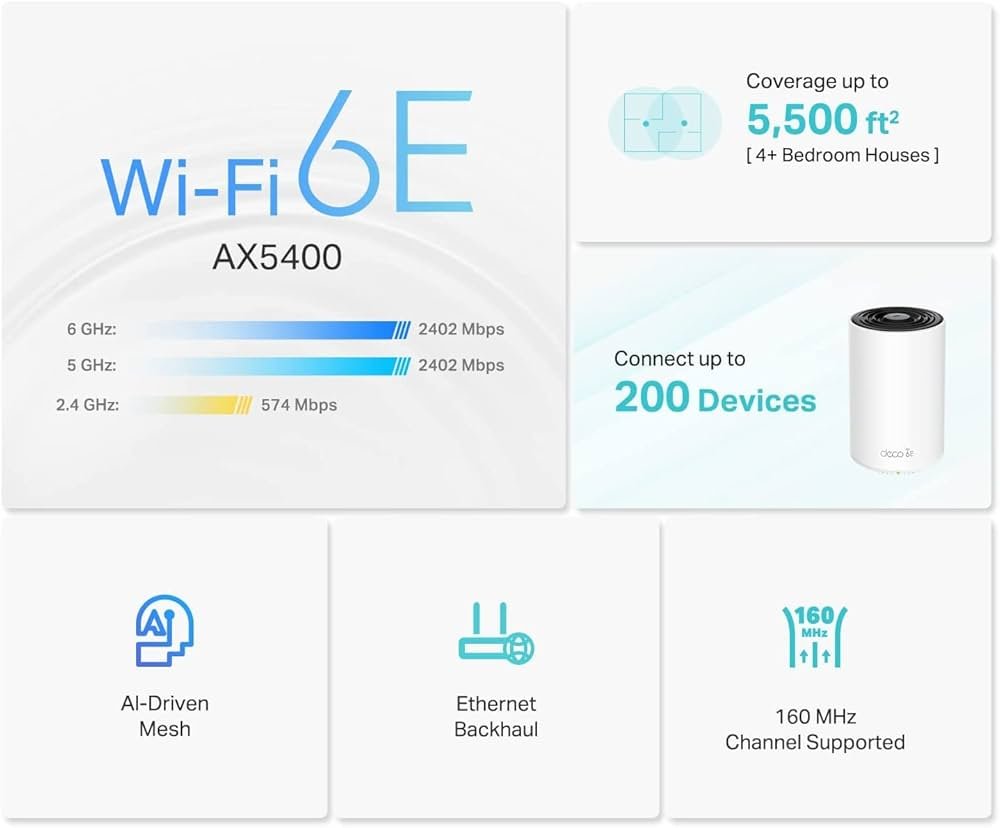
Are you wondering how fast your internet can really go with Wifi 6E mesh? If you want faster, smoother connections for all your devices, understanding the speeds Wifi 6E mesh supports is key.
This technology promises to change the way you experience online gaming, streaming, and working from home. Keep reading, and you’ll discover how Wifi 6E mesh can boost your internet speed and why it might be the upgrade your home network needs right now.

Credit: www.pcmag.com
Wifi 6e Basics
WiFi 6E extends the capabilities of WiFi 6 by using a new frequency band. It offers faster speeds and less interference. This makes it ideal for mesh networks in busy homes and offices.
This technology supports more devices at once and provides a smoother internet experience. Understanding its features helps in choosing the right mesh system.
New 6 Ghz Band
The main difference in WiFi 6E is the addition of the 6 GHz band. This band is wider and less crowded than the traditional 2.4 GHz and 5 GHz bands.
- The 6 GHz band offers up to 1200 MHz of extra spectrum.
- It supports more channels for less overlap and interference.
- Devices can achieve higher speeds with lower latency.
- It improves performance in dense environments with many users.
Differences From Wifi 6
| Feature | WiFi 6 | WiFi 6E |
|---|---|---|
| Frequency Bands | 2.4 GHz and 5 GHz | 2.4 GHz, 5 GHz, and 6 GHz |
| Maximum Speed | Up to 9.6 Gbps | Up to 9.6 Gbps with less interference |
| Channel Width | Up to 160 MHz | Up to 160 MHz with more channels |
| Device Capacity | High | Higher due to more spectrum |
Benefits Of Wifi 6e
WiFi 6E brings several benefits for mesh networks and users who need reliable, fast internet.
- Less signal interference improves connection quality.
- Supports more devices without slowing down the network.
- Higher data rates mean faster downloads and streaming.
- Better performance in crowded places like apartments or offices.
- Improved latency helps with video calls and gaming.
Mesh Network Technology
WiFi 6E mesh networks use new technology to improve internet speed. They spread WiFi signals evenly in your home or office.
This system works well for many devices at once. It reduces dead zones and keeps connections strong.
How Mesh Wifi Works
A mesh WiFi system has multiple nodes that talk to each other. Each node acts like a mini router. They work together to cover large areas.
- Nodes connect wirelessly or by cable.
- Devices switch to the strongest node automatically.
- Nodes share data to keep fast speeds.
- WiFi 6E adds a new 6 GHz band for less interference.
Advantages Over Traditional Routers
| Feature | Mesh Network | Traditional Router |
| Coverage | Large, whole home | Limited to one point |
| Speed Support | Up to 9.6 Gbps with WiFi 6E | Usually less than 3 Gbps |
| Device Handling | Supports many devices smoothly | Can slow down with many devices |
| Setup | Easy with app guidance | May require manual setup |
Wifi 6e Mesh Speeds
WiFi 6E mesh networks offer faster speeds than older WiFi versions. They use the new 6 GHz band for better performance.
This new band adds more channels and less interference. It helps devices connect faster and more reliably in a mesh system.
Theoretical Maximum Speeds
WiFi 6E can reach very high speeds under perfect conditions. The 6 GHz band supports wider channels up to 160 MHz.
These wider channels allow faster data transfer rates. The highest speed for WiFi 6E mesh can exceed 9.6 Gbps.
- Supports 160 MHz channels for high throughput
- Uses 1024-QAM for better data encoding
- Can deliver up to 9.6 Gbps combined speed
- Improves speed with multiple antennas (MU-MIMO)
Real-world Performance Factors
Real speeds depend on many factors, so they are lower than the maximum. Distance from the router affects connection quality.
Walls, furniture, and other obstacles can slow WiFi signals. The number of devices connected also lowers speed for each device.
- Distance reduces signal strength and speed
- Physical barriers block or weaken signals
- More devices share the bandwidth
- Interference from other electronics may occur
- Device hardware limits maximum speed
Factors Affecting Wifi 6e Mesh Speed
WiFi 6E mesh networks offer faster speeds and better coverage. Still, several factors affect their real-world performance.
Understanding these factors helps you get the most from your WiFi 6E mesh system.
Device Compatibility
Devices must support WiFi 6E to use the full speed and features. Older devices work but at lower speeds.
- WiFi 6E devices use the 6 GHz band for faster data transfer.
- Devices limited to 2.4 GHz or 5 GHz bands get slower speeds.
- Firmware updates may improve device compatibility and speed.
Interference And Range
Interference and the distance between mesh nodes affect WiFi speed and reliability.
| Factor | Effect on Speed |
| Walls and Floors | Reduce signal strength and speed |
| Other Wireless Devices | Cause signal interference |
| Distance from Router | Greater distance lowers speed |
| High Frequency Band (6 GHz) | Less interference but shorter range |
Network Congestion
Too many devices using the same network reduce the available speed for each.
- Multiple users stream videos at once.
- Large file downloads consume bandwidth.
- Online gaming requires stable, fast connections.
- Smart home devices add more traffic.
Comparing Wifi 6e Mesh To Other Standards
WiFi 6E Mesh is the latest in wireless network technology. It offers new features and higher speeds. We will compare WiFi 6E Mesh to older standards. This helps to see how it improves wireless connections.
Understanding differences between WiFi 5, WiFi 6, and WiFi 6E Mesh can guide your choice. Each standard has unique speeds and frequency bands. Let’s look at these comparisons closely.
Wifi 5 Vs Wifi 6e Mesh
WiFi 5 works mainly on the 5 GHz band. It delivers good speed but has limits with many devices. WiFi 6E Mesh adds the 6 GHz band. This extra band reduces interference and speeds up connections.
| Feature | WiFi 5 | WiFi 6E Mesh |
|---|---|---|
| Frequency Bands | 2.4 GHz, 5 GHz | 2.4 GHz, 5 GHz, 6 GHz |
| Max Speed | Up to 3.5 Gbps | Up to 9.6 Gbps |
| Device Support | Less efficient with many devices | Better handling of multiple devices |
| Latency | Higher latency in busy networks | Lower latency and faster response |
Wifi 6 Vs Wifi 6e Mesh
WiFi 6 and WiFi 6E Mesh share many features. The main difference is the 6 GHz band in WiFi 6E Mesh. This band offers more channels and less interference.
- WiFi 6 supports 2.4 GHz and 5 GHz bands.
- WiFi 6E Mesh adds the 6 GHz band for extra capacity.
- The 6 GHz band allows faster speeds and better performance.
- WiFi 6E Mesh is ideal for crowded areas with many devices.
- Both standards support advanced features like OFDMA and MU-MIMO.
Optimizing Wifi 6e Mesh Performance
WiFi 6E is the latest advancement in wireless technology. It promises faster speeds and better connectivity. To get the most out of your WiFi 6E mesh, proper setup is crucial.
This guide will show you how to optimize your WiFi 6E mesh. You’ll learn about placement, firmware updates, and channel selection.
Placement Tips
Proper placement of your WiFi mesh nodes is key. It ensures strong and reliable coverage throughout your home.
- Place nodes in central locations.
- Avoid placing nodes near thick walls or metal objects.
- Elevate nodes for better signal distribution.
Firmware Updates
Keeping your firmware up-to-date is essential. It helps improve performance and security.
Check for updates regularly. Install updates as soon as they are available.
Channel Selection
Choosing the right channel can reduce interference. This leads to a stronger, more stable connection.
Use a WiFi analyzer to check which channels are less crowded. Set your mesh to those channels for better performance.
Future Of Wifi 6e Mesh
WiFi 6E Mesh is the latest advancement in wireless technology. It promises faster speeds and better connectivity.
This new technology operates on the 6 GHz band. It offers more channels and less interference.
Upcoming Enhancements
WiFi 6E Mesh will see many enhancements in the coming years. These improvements will make it more efficient and user-friendly.
- Improved signal strength for larger areas
- Better integration with smart home devices
- More secure connections with advanced encryption
Adoption Trends
The adoption of WiFi 6E Mesh is growing rapidly. More households and businesses are upgrading to this new standard.
| Year | Adoption Rate |
| 2023 | 20% |
| 2024 | 35% |
| 2025 | 50% |
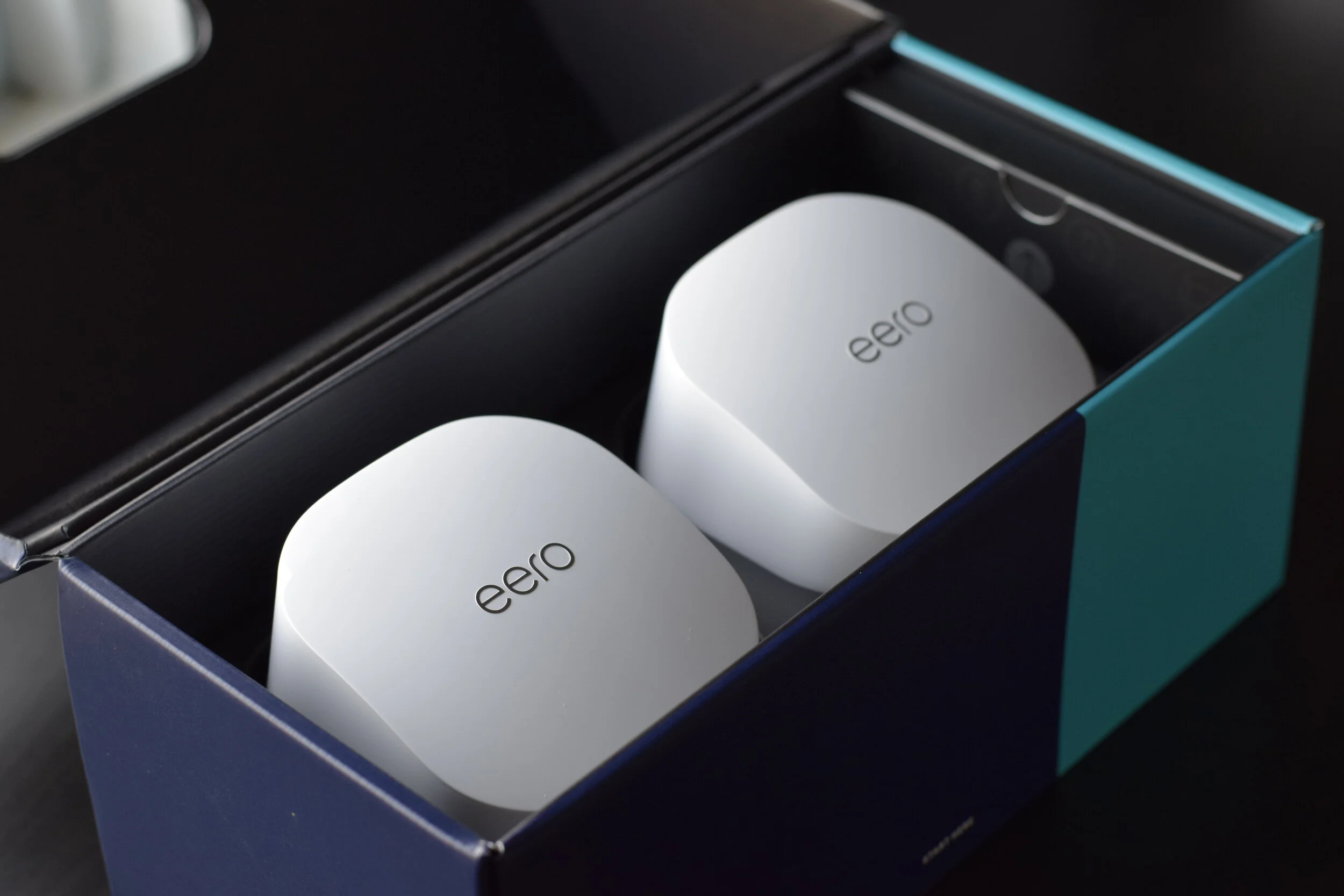
Credit: evanmccann.net
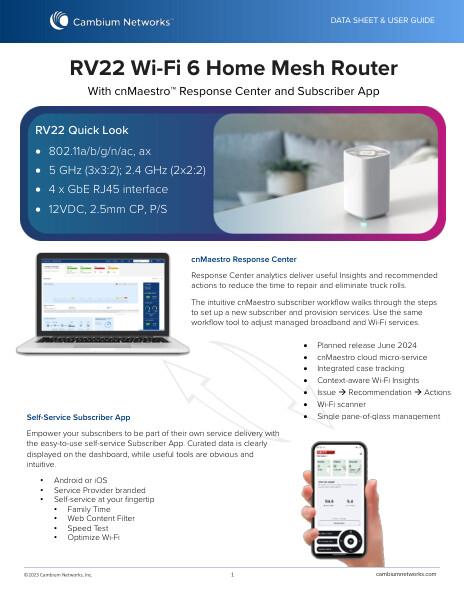
Credit: www.cambiumnetworks.com
Frequently Asked Questions
What Is The Maximum Speed Of Wifi 6e Mesh?
WiFi 6E mesh can support speeds up to 9. 6 Gbps under ideal conditions. This is due to the 6 GHz band offering more bandwidth and less interference compared to older WiFi bands.
How Does Wifi 6e Improve Mesh Network Speed?
WiFi 6E uses the 6 GHz spectrum, which provides wider channels and lower latency. This enhances mesh network speed and reduces congestion, resulting in faster and more reliable connections.
Does Wifi 6e Mesh Support Faster Streaming?
Yes, WiFi 6E mesh supports faster streaming by offering higher throughput and lower latency. This enables smooth 4K/8K video streaming and seamless online gaming without buffering.
Can Wifi 6e Mesh Handle Multiple Devices Simultaneously?
WiFi 6E mesh efficiently manages multiple devices using OFDMA and MU-MIMO technologies. This maintains high speeds and stable connections even with many connected devices.
Conclusion
Wifi 6E mesh supports very fast speeds, much faster than older WiFi versions. It uses new channels in the 6 GHz band to reduce traffic and interference. This means better connections for many devices at once. Your home network can handle streaming, gaming, and work without slowdowns.
Speed depends on your devices and internet plan too. Overall, Wifi 6E mesh offers a strong and quick connection for modern needs. It helps keep your online experience smooth and reliable.