Is your Wi-Fi struggling to reach every corner of your large home? You’re not alone.
When it comes to boosting your internet signal, two popular options stand out: mesh Wi-Fi systems and range extenders. But which one truly fits your needs? Choosing the right solution can transform your online experience, eliminating dead zones and slow connections.
Keep reading, and you’ll discover which option is better suited to power up your entire home effortlessly.
Mesh Wifi Systems
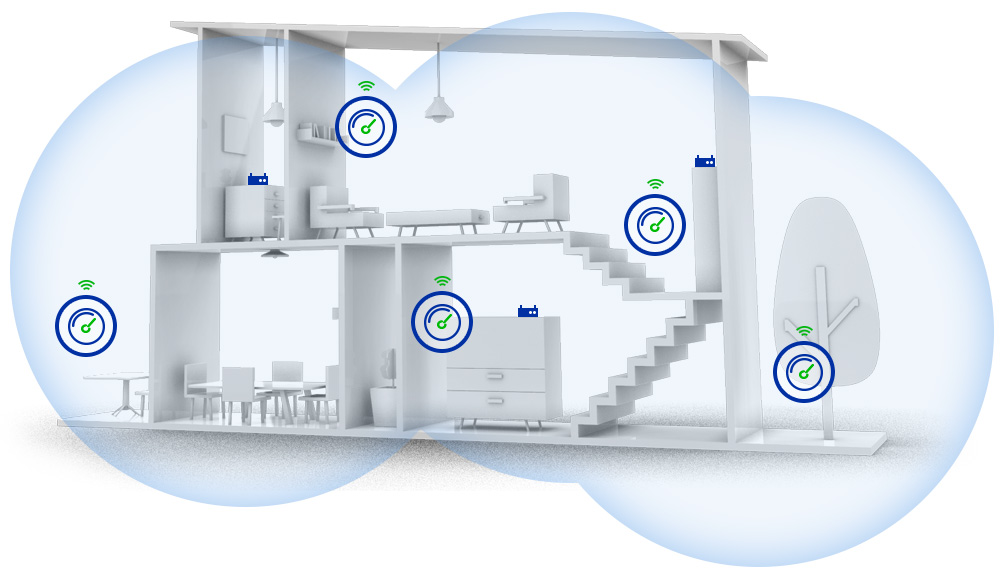
Mesh Wifi systems create a strong wireless network in large homes. They use multiple devices called nodes to cover every corner. This helps avoid dead zones and slow connections.
Unlike single routers, mesh systems work together to spread internet signals evenly. This makes them a good choice for big houses with many rooms and floors.
How Mesh Wifi Works
Mesh Wifi uses several nodes that connect to each other wirelessly or with cables. One node links to the modem, and the others spread the signal around the home.
- Each node shares the same network name and password.
- Devices switch automatically to the strongest node.
- This reduces weak signals and dropouts.
- Nodes communicate to find the best path for data.
Benefits For Large Homes
Mesh systems offer many advantages in big houses. They provide consistent coverage and support many devices at once.
| Benefit | Details |
| Wide Coverage | Nodes cover large areas without signal loss. |
| Easy Expansion | Add more nodes to cover new spaces. |
| Seamless Roaming | Switch devices between nodes without dropping connection. |
| High Speed | Maintain fast internet even far from the main router. |
Setup And Management
Installing mesh Wifi is simple. Most systems come with an app that guides users through setup and management.
- Connect the main node to your modem.
- Place other nodes in key areas around your home.
- Use the app to link nodes and name your network.
- Monitor network performance and connected devices easily.
- Update firmware through the app to keep the system secure.

Credit: cybernews.com
Range Extenders
Range extenders help increase WiFi coverage in large homes. They repeat the wireless signal from your router to reach farther areas.
Using a range extender can improve internet access in rooms that are far from the main router.
Range Extender Basics
Range extenders connect wirelessly to your existing WiFi network. They pick up the signal and broadcast it to areas with weak coverage.
- They usually plug into a power outlet in a dead zone.
- Extenders create a second network name (SSID) for devices to connect.
- They work best when placed halfway between the router and the weak area.
Advantages In Home Networks
Range extenders can improve WiFi reach without changing your existing router. They offer simple and affordable coverage solutions.
| Advantage | Details |
| Cost | Less expensive than new routers or mesh systems |
| Setup | Easy to install and configure |
| Coverage | Boosts signal to hard-to-reach rooms |
| Flexibility | Can be moved to different locations as needed |
Installation Tips
Place the range extender where the WiFi signal is still strong. Avoid placing it too far from the router or too close to dead zones.
- Plug the extender into a power outlet about halfway between your router and the weak signal area.
- Connect the extender to your router’s WiFi using the setup button or app.
- Test the extended network in the target area to check signal strength.
- Adjust the extender’s position if the signal is still weak.
- Keep the extender away from thick walls and metal objects that block signals.
Coverage Comparison
Choosing the right WiFi solution is important for large homes. Coverage affects how well your devices connect.
This comparison looks at Mesh WiFi and Range Extenders based on coverage features.
Signal Strength And Reach
Mesh WiFi systems use multiple units working together. They create one strong network with good signal across the home.
Range extenders boost the signal from your main router. But the signal strength can drop after the extender.
- Mesh systems cover wider areas evenly.
- Range extenders may create weak spots near the edge.
- Mesh units communicate to keep strong connections.
- Range extenders often cut speed in half when extending.
Handling Dead Zones
Dead zones are areas with no WiFi signal. Mesh networks reduce dead zones by placing nodes in key spots.
Range extenders can help with some dead zones but may fail in very large or complex layouts.
| Feature | Mesh WiFi | Range Extender |
| Coverage Consistency | High, seamless | Varies, patchy |
| Ease of Adding Coverage | Easy, add nodes | Limited by router |
| Dead Zone Reduction | Effective | Moderate |
Performance In Multi-story Homes
Multi-story homes need signals to pass through floors and walls. Mesh WiFi adapts well with nodes on different levels.
Range extenders may struggle as signals weaken when passing floors. Placement is critical but often tricky.
- Place Mesh nodes on each floor for best results.
- Put range extenders near stairs or open areas.
- Avoid thick walls and metal objects in the signal path.
- Test signal strength after setup and adjust locations.
Speed And Reliability
Choosing between Mesh WiFi and a Range Extender can affect your home’s internet performance. Large homes need a reliable and fast connection. The right choice will ensure good speed and stable connections.
Let’s explore how each option performs in terms of connection stability, internet speeds, and device handling.
Connection Stability
Mesh WiFi systems provide strong, consistent coverage. They use multiple nodes to create a seamless network. Range extenders often have signal drops, especially at greater distances.
- Mesh WiFi: Seamless coverage without gaps
- Range Extender: Can have weak spots
Impact On Internet Speeds
Mesh WiFi often maintains speeds across the network. Range extenders may reduce the speed because they rebroadcast the signal. This can lead to slower connections in some areas.
| Feature | Mesh WiFi | Range Extender |
| Speed Consistency | High | Variable |
| Signal Strength | Uniform | Decreases with distance |
Device Handling Capacity
Mesh WiFi systems are designed to handle many devices. They distribute the load efficiently. Range extenders can struggle with multiple devices, leading to congestion.
Cost And Value
Choosing between mesh WiFi and range extenders depends on your budget. Both can improve WiFi coverage in large homes.
Understanding the costs and benefits helps you decide the best option for your needs.
Initial Investment
Mesh WiFi systems usually cost more upfront than range extenders. They come as a set of devices that work together.
Range extenders are cheaper and sold as single units. You may need more than one for large homes.
- Mesh WiFi: Higher price, multiple units included
- Range Extender: Lower price, may need multiple devices
Long-term Expenses
Mesh systems often include free updates and easier management. This can save money over time.
Range extenders may need replacement sooner. They might lack firmware updates and support.
- Mesh WiFi: Software updates included, longer lifespan
- Range Extender: Possible early replacement, limited updates
Feature Sets And Upgrades
Mesh WiFi offers features like seamless roaming and easy app control. These features improve user experience.
Range extenders often have basic features and limited upgrade options. They may not support the latest WiFi standards.
- Mesh WiFi: Seamless coverage, app management, frequent upgrades
- Range Extender: Basic coverage, manual setup, fewer updates
User Experience
Choosing between Mesh WiFi and Range Extenders can change internet use in large homes. Each option offers unique features and challenges.
Understanding user experience factors helps in making an informed decision. Let’s explore key aspects like ease of use, troubleshooting, and customer support.
Ease Of Use
Both Mesh WiFi and Range Extenders aim to enhance internet access. Mesh WiFi systems are typically easier to set up and manage. They offer seamless connectivity across the home.
- Mesh WiFi often requires a simple app setup.
- Range Extenders may need manual configuration.
- Mesh systems automatically update and optimize.
Troubleshooting Common Issues
Problems can arise with either system. Mesh WiFi usually provides better diagnostics through apps, making it easier to identify issues. Range Extenders can face signal interference more often.
Common troubleshooting steps:
- Check device placement for optimal signal.
- Ensure firmware is updated.
- Restart devices regularly to clear cache.
Customer Support
Good customer support is crucial for resolving issues. Mesh WiFi brands often provide extensive support options, including online resources and live chat. Range Extenders might offer limited support depending on the brand.
| Support Option | Mesh WiFi | Range Extender |
| Live Chat | Available | Varies |
| Online Resources | Comprehensive | Basic |
| Community Forums | Active | Less Active |
Best Use Cases
Choosing between mesh wifi and range extenders depends on your home’s size and shape. Each option has strong points for different needs.
This guide shows when mesh wifi or range extenders work best. It also covers hybrid setups that combine both technologies.
Ideal Scenarios For Mesh Wifi
Mesh wifi works well in large or multi-story homes. It offers consistent coverage by using several connected nodes.
- Homes with multiple floors or thick walls
- Users needing fast and stable internet everywhere
- Families with many devices connected at once
- Large open areas where one router is not enough
- People who want easy network management through apps
When Range Extenders Shine
Range extenders work best in smaller spaces or to fix small dead zones. They boost signals from an existing router.
| Use Case | Why Range Extender Works |
| Small dead zones | Quick and affordable signal boost |
| Single-story homes | Simple to set up without new devices |
| Limited budget | Cheaper than full mesh systems |
| Temporary network needs | Easy to move and remove |
Hybrid Solutions
Some homes benefit from a mix of mesh wifi and range extenders. This setup can fill tricky coverage gaps.
Hybrid setups work well when:
- Mesh nodes cover most of the home
- Range extenders boost signal in hard-to-reach spots
- Budget limits prevent full mesh coverage
- Older parts of the home need extra signal help
Credit: caspianprimesolutions.com

Credit: www.reddit.com
Frequently Asked Questions
What Is The Main Difference Between Mesh Wifi And Range Extenders?
Mesh WiFi creates a single network with multiple nodes, offering seamless coverage. Range extenders boost signal from a router but create separate networks, often causing slower speeds and drops.
Which Is Better For Large Homes, Mesh Wifi Or Range Extender?
Mesh WiFi is better for large homes due to wider, consistent coverage and stronger signals. Range extenders are less reliable and often cause dead zones and slower connections.
How Does Mesh Wifi Improve Internet Speed In Large Houses?
Mesh WiFi uses multiple nodes to distribute signals evenly, reducing congestion and dead zones. This setup ensures faster, more stable speeds across large areas compared to range extenders.
Are Range Extenders Easy To Install For Home Use?
Yes, range extenders are generally easy to install and affordable. However, they often require manual setup and create separate networks, which can confuse devices and users.
Conclusion
Choosing between mesh wifi and range extenders depends on your home size and needs. Mesh wifi offers strong, seamless coverage throughout large spaces. Range extenders work well for smaller areas or specific dead spots. Consider your budget, internet speed, and device number before deciding.
Both options improve your wifi but in different ways. Think about ease of setup and future expansion too. A good wifi system keeps all devices connected without interruptions. Pick the solution that fits your lifestyle and home best.