Are you confused about which router to choose for your home or office? You’ve probably heard about Tri Band routers and WiFi 6 routers, but which one truly gives you the best speed, coverage, and reliability?
Choosing the right router can change how smoothly your devices connect, stream, and work. This article will help you understand the key differences and benefits so you can make the smartest choice for your internet setup. Keep reading to find out which router fits your needs perfectly—and why it matters more than you think.
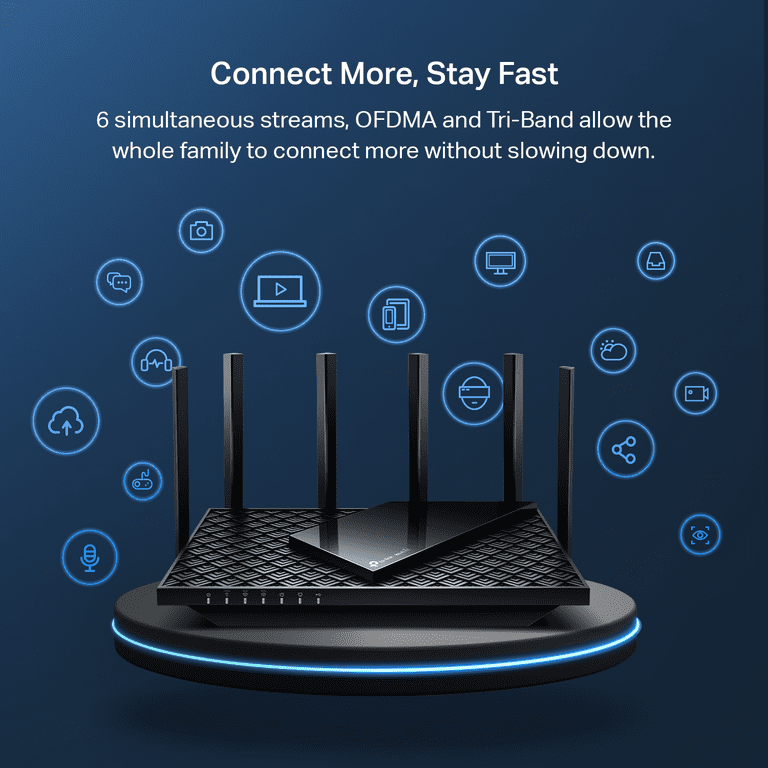
Credit: www.walmart.com
Tri Band Router Basics
Understanding the basics of a tri band router helps in choosing the right device. These routers offer multiple frequency bands to improve network performance. They handle more devices and reduce traffic jams on your WiFi.
Tri band routers are designed to balance speed and coverage. They work well in busy homes or offices with many connected gadgets. Learning their features clarifies how they differ from other routers.
Frequency Bands Explained
A tri band router uses three frequency bands. It includes one 2.4 GHz band and two 5 GHz bands. The 2.4 GHz band covers a wider area but has slower speed.
The 5 GHz bands provide faster speed but shorter range. Two 5 GHz bands mean less interference and better device management. This setup allows multiple devices to connect smoothly.
Advantages Of Tri Band
- Supports many devices without slowing down.
- Reduces WiFi traffic congestion.
- Improves streaming and gaming performance.
- Extends wireless coverage in large spaces.
- Offers better speed on busy networks.
Ideal Use Cases
Tri band routers suit homes with many smart devices. They work well in offices with heavy internet use. Streaming 4K videos and online gaming benefit from tri band routers.
They fit places where multiple users connect at once. Large homes with WiFi dead zones gain from wider coverage. They also help in crowded networks with many active devices.

Credit: www.expressvpn.com
Wifi 6 Router Features
Understanding WiFi 6 router features can help you decide if it’s the right upgrade for your home or office network. These routers bring new technologies designed to improve your internet experience, especially if you have multiple devices connected at once. Let’s break down what makes WiFi 6 routers stand out.
New Technologies In Wifi 6
WiFi 6 introduces technologies like OFDMA and MU-MIMO that manage traffic more efficiently. This means your router can handle many devices simultaneously without slowing down your connection. If you have smart home devices, streaming gadgets, and work computers all using the same network, WiFi 6 can keep everything running smoothly.
Another feature is Target Wake Time (TWT), which helps your devices save battery by scheduling communication times with the router. This is especially useful for smartphones and IoT devices, extending their battery life without sacrificing connectivity.
Speed And Efficiency
WiFi 6 routers offer higher maximum speeds compared to previous generations, but the real benefit is efficiency during heavy use. The technology reduces latency, so your online gaming and video calls feel more responsive. You might not always see a massive boost in raw speed, but your network will perform better when multiple devices are active.
Think about your typical day: streaming a movie, uploading files, and video chatting all at once. With a WiFi 6 router, these tasks won’t compete for bandwidth as aggressively. This leads to a noticeably smoother experience.
Compatibility And Range
WiFi 6 routers are backward compatible, meaning they work with older WiFi devices too. You don’t need to replace every gadget to benefit from the upgrade. This makes the transition easier and more budget-friendly.
Range improvements come from enhanced signal processing and beamforming, which directs WiFi signals more precisely to your devices. You’ll likely notice fewer dead zones and better connection quality in larger spaces. Have you ever lost signal in a room far from your router? WiFi 6 aims to fix that problem.
Performance Comparison
Comparing performance between tri-band routers and WiFi 6 routers reveals key differences. Both aim to improve wireless experience but focus on different strengths. Understanding their speed, latency, and device handling helps choose the right router.
Speed Tests
Tri-band routers use three separate frequency bands to boost speed. This design helps reduce traffic on each band. WiFi 6 routers offer faster speeds through new technology like OFDMA and 1024-QAM.
In real-world tests, WiFi 6 routers usually provide higher peak speeds. Tri-band routers perform well in busy networks but may not reach WiFi 6’s maximum speed. Speed depends on device compatibility and environment.
Latency And Stability
WiFi 6 routers reduce latency by managing data packets efficiently. This makes connections more stable and responsive. Tri-band routers can handle more devices but may face slight delays during peak use.
Latency is crucial for video calls and gaming. WiFi 6 routers generally keep lag low. Tri-band routers offer steady connections but can vary with network load.
Handling Multiple Devices
Tri-band routers split traffic across three bands, easing congestion. This helps networks with many active devices. WiFi 6 uses advanced scheduling to serve multiple devices faster.
WiFi 6 excels in dense environments with many smart devices. Tri-band routers still perform well but might struggle as device count grows. Choosing depends on your home’s device number and type.
Security And Privacy
In today’s digital landscape, security and privacy are paramount when choosing between a tri-band router and a WiFi 6 router. Both routers offer advanced features, but how do they stack up against each other in protecting your data? Let’s dive into the specific security measures they provide to ensure your online safety.
Encryption Standards
Encryption is the backbone of your network’s security. WiFi 6 routers typically support the latest WPA3 encryption standard. This means stronger protection against brute-force attacks and better safeguards for your sensitive information.
Tri-band routers, depending on their model, may also support WPA3 or stick with the older WPA2 standard. It’s essential to check which encryption your tri-band router offers. The right encryption can make all the difference in keeping hackers at bay.
Additional Security Features
Both tri-band and WiFi 6 routers come with additional security features that enhance your network’s safety. WiFi 6 routers often include features like automatic firmware updates, which ensure your router is always protected against the latest threats.
Some tri-band routers offer advanced parental controls and guest network options, enabling you to manage who accesses your network and what they can see. This can be particularly useful if you have children or frequently host visitors.
Consider what security features are most important for your household. Do you need robust parental controls, or is the latest encryption your top priority?
Your choice between a tri-band and a WiFi 6 router should align with your specific security needs. Always prioritize your peace of mind when it comes to online security.
Price And Value
Price and value play a key role in choosing between a Tri Band router and a WiFi 6 router. Understanding the cost differences and long-term benefits helps make a smart decision. Each type offers unique advantages that affect your budget and network experience.
Cost Differences
Tri Band routers usually cost more upfront than WiFi 6 routers. They have extra bands to support more devices and reduce congestion. This adds to the manufacturing cost. WiFi 6 routers focus on faster speeds and better efficiency, often at a lower price.
Basic WiFi 6 routers can be affordable for most users. Tri Band routers tend to target users with heavy internet use or many connected devices. The price gap can be significant, but depends on brand and features.
Long-term Benefits
WiFi 6 routers improve battery life for connected devices. They also handle crowded networks better, saving time and frustration. This means fewer slowdowns and better performance over time.
Tri Band routers offer more simultaneous connections. This suits large families or homes with many smart devices. The extra band reduces interference and keeps speeds steady. Over time, this can lead to a smoother internet experience.
Investing in either router depends on your needs. Consider the value of speed, device support, and network stability for your home or office.
Which Router Fits Your Needs
Choosing the right router depends on your daily needs and internet habits. Both Tri Band and WiFi 6 routers offer benefits, but they suit different users. Understanding your usage helps pick the best option.
Consider how many devices connect and what activities you do online. Network speed, coverage, and future upgrades matter too. Let’s explore which router fits your needs best.
Home Use Scenarios
For small to medium homes, WiFi 6 routers usually work well. They provide fast speeds and support many devices efficiently. Streaming movies, browsing, and video calls run smoothly.
Tri Band routers help larger homes with many users and devices. They reduce network traffic by splitting devices across three bands. This keeps connections stable during busy times.
Business And Gaming
Businesses need reliable and fast internet for multiple users. Tri Band routers offer better handling of heavy traffic and many devices. This prevents slowdowns during work hours.
Gamers benefit from WiFi 6 routers’ low latency and fast response times. The technology reduces lag, improving online gaming experience. It supports newer devices with the latest standards.
Future-proofing Your Network
WiFi 6 routers prepare your network for upcoming technology. They support higher speeds and improved security protocols. This makes them a smart choice for long-term use.
Tri Band routers focus on better coverage and device management now. They help if many devices connect at once but may lack newer tech features. Consider your upgrade plans before choosing.

Credit: www.youtube.com
Frequently Asked Questions
What Is The Main Difference Between Tri Band And Wifi 6 Routers?
Tri Band routers use three frequency bands to reduce congestion. WiFi 6 routers improve speed and efficiency with advanced technology. The choice depends on your network needs and device compatibility.
Does Tri Band Router Support Wifi 6 Technology?
Not all Tri Band routers support WiFi 6. Some use older WiFi standards. Check the router specifications to confirm if WiFi 6 is included.
Which Router Is Better For Gaming, Tri Band Or Wifi 6?
WiFi 6 routers offer lower latency and faster speeds, ideal for gaming. Tri Band helps with multiple devices but may not reduce lag as effectively.
Can Tri Band Routers Improve Internet Speed Significantly?
Tri Band routers can improve speed by balancing traffic across bands. However, actual speed depends on your internet plan and device capabilities.
Conclusion
Choosing between a tri-band router and a WiFi 6 router depends on your needs. Tri-band routers offer more channels and less interference. WiFi 6 routers provide faster speeds and better device management. Both improve your internet experience in different ways.
Consider your devices and home size before buying. A good router helps keep your connection strong and steady. Think about what matters most to you—speed, range, or device support. This way, you get the best value and performance for your home network.