Are you struggling with weak WiFi signals when you’re outside? You might be wondering if dual band WiFi extenders can boost your connection outdoors.
The idea sounds simple—just place an extender outside and enjoy faster internet on your patio or in your backyard. But does it really work that way? If you want reliable WiFi without endless buffering or dead zones beyond your walls, keep reading.
This guide will help you understand how dual band WiFi extenders perform outdoors and whether they are the right solution for your needs.

Credit: www.youtube.com
How Dual Band Wifi Extenders Work
Dual band WiFi extenders use two frequency bands: 2.4 GHz and 5 GHz. The 2.4 GHz band covers a larger area but has slower speeds. The 5 GHz band offers faster speeds but covers less distance.
They boost signals by receivingyour router’s WiFi and retransmittingit. This helps extend the WiFi range to areas with weak signals. Extenders work by creating a new network name or repeating the original one.
- 2.4 GHz band:Better range, slower speed, good for outdoors
- 5 GHz band:Faster speed, shorter range, best for indoors
- Signal boosting:Captures and sends WiFi to weak spots

Credit: www.amazon.com
Outdoor Wifi Challenges
Outdoor WiFi signals face many challenges. Trees, walls, and buildings can block or weaken signals. Rain and wind cause interferencetoo.
Distance plays a big role in signal strength. The farther the extender, the weaker the signal. Even small obstacles like garden furniture can reduce signal quality.
| Challenge | Effect on WiFi |
|---|---|
| Walls and Buildings | Block or weaken signals |
| Trees and Plants | Cause signal loss through interference |
| Weather (Rain, Wind) | Disturb signal flow |
| Distance | Signal strength decreases over distance |
| Small Obstacles | Reduce signal quality |
Performance Factors For Outdoor Use
Signal range and strengthare key for outdoor WiFi extenders. Walls and trees can block signals. Dual band extenders use 2.4 GHz and 5 GHz bands. The 2.4 GHz band covers longer distances but is slower. The 5 GHz band is faster but covers less distance. Proper placement helps keep a strong signal outdoors.
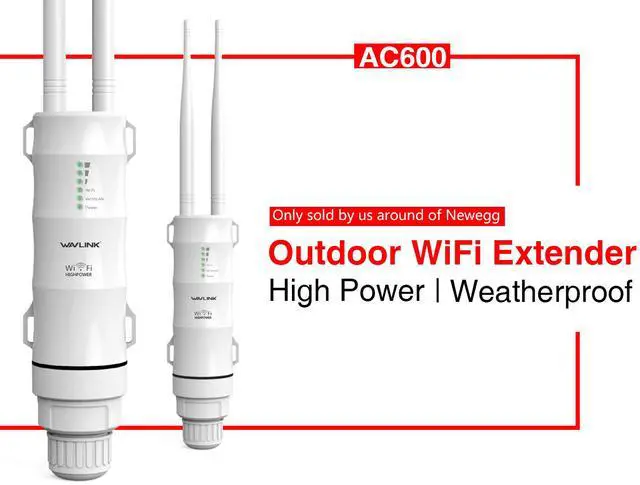
Weather impactaffects WiFi extender performance. Rain, snow, and fog can reduce signal strength. Cold or hot temperatures can harm devices not made for outdoors. Using weatherproof extenders or protective covers can help maintain good performance.
| Device Compatibility | Details |
|---|---|
| Router Frequency | Must support dual band (2.4 GHz & 5 GHz) for best use |
| Extender Type | Outdoor-rated extenders are best for weather and range |
| Device Support | Check if connected devices support both frequency bands |
Credit: www.newegg.com
Setting Up Dual Band Extenders Outdoors
Placing a dual band extender outdoors needs careful thought. Choose a spot close to your routerbut shielded from rain and sun. Avoid walls or metal objects that block signals. Higher spots often work better for wider coverage.
For power, use an outlet designed for outdoor use. Some extenders can run on Power over Ethernet (PoE), which combines power and data in one cable. This reduces the need for extra wiring and keeps setup simple.
| Tip | Details |
|---|---|
| Distance | Place extender within 30 feet of the router for best signal |
| Weatherproofing | Use a weatherproof case or enclosure to protect the extender |
| Power Source | Use outdoor-rated outlets or PoE for safe power supply |
| Signal Obstruction | Avoid thick walls, metal fences, and large trees |
Comparing Dual Band Extenders With Alternatives
Single band extendersuse one frequency, usually 2.4 GHz. They are less costly but offer slower speeds and more interference outdoors. These extenders work for simple coverage but may struggle with walls and distance.
Mesh wifi systemscreate a network with multiple nodes. They provide seamless coverage and better outdoor performance. Mesh systems are easy to expand and handle many devices well, but they can be more expensive.
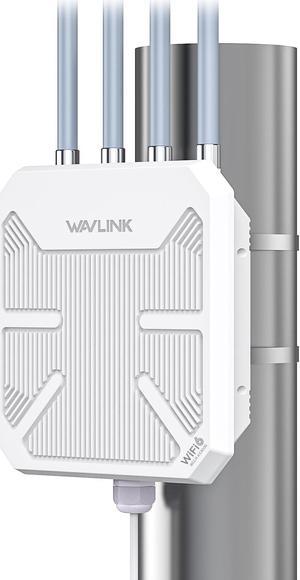
Outdoor access pointsare made specifically for outdoor use. They resist weather and offer strong signals over large areas. They connect directly to your router and give more stable connections than extenders.
| Type | Pros | Cons |
|---|---|---|
| Single Band Extenders | Lower cost, easy setup | Slower speed, more interference |
| Mesh Wifi Systems | Wide coverage, seamless connection | Higher price, more complex |
| Outdoor Access Points | Weatherproof, strong signal | Needs wired connection, higher cost |
Common Issues And Troubleshooting
Signal drops often happen due to distance or obstacles like walls and trees. Moving the extender closer to the router can help. Thick walls block signals easily.
- Try changing the extender’s position to avoid obstacles.
- Keep the device away from metal objects or water sources.
- Use the 5 GHz band for less interference but shorter range.
- Switch to 2.4 GHz for better distance but slower speed.
Interference comes from other wireless devices and electronics nearby. Cordless phones, microwaves, and baby monitors cause problems.
- Place the extender far from other electronics.
- Change the WiFi channel in the extender settings to a less busy one.
Firmware updates fix bugs and improve performance. Check the extender’s brand website for updates often.
- Download the latest firmware from the official site.
- Follow instructions carefully to update safely.
- Restart the extender after updating.
Maximizing Outdoor Wifi Performance
Using high-gain antennascan greatly improve outdoor WiFi signals. These antennas focus the signal in one direction, helping to reach farther places. They reduce interference and boost the strength of the connection. This makes the WiFi more stable in open areas.
Adjusting channel settingshelps avoid signal overlap from nearby networks. Choosing the right channel reduces noise and improves speed. It is best to pick channels with less traffic for better performance.
- Change channels on your extender’s settings page.
- Use apps or tools to find the least crowded channel.
- Test different channels to see which works best.
Security considerationsare important outdoors. Use strong passwords to keep your network safe. Enable WPA3 or WPA2 encryption for better protection. Make sure the extender’s firmware is up to date to avoid vulnerabilities.
Frequently Asked Questions
Do Dual Band Wifi Extenders Work Well Outdoors?
Yes, dual band WiFi extenders can work outdoors effectively. They enhance signal strength on both 2. 4 GHz and 5 GHz bands, improving coverage. However, their performance outdoors depends on weather conditions and proper placement for optimal range and signal stability.
Can Dual Band Extenders Improve Outdoor Wifi Speed?
Dual band extenders boost outdoor WiFi speed by supporting higher data rates on the 5 GHz band. They reduce interference on the 2. 4 GHz band, providing faster and more reliable connections in outdoor areas when positioned correctly.
Are Dual Band Wifi Extenders Weather-resistant?
Most dual band WiFi extenders are designed for indoor use. For outdoor use, you need weather-resistant or specifically outdoor-rated extenders to withstand rain, heat, and dust, ensuring durability and consistent performance.
How Far Can Dual Band Extenders Extend Outdoor Wifi?
Dual band extenders can extend WiFi coverage outdoors up to 100-200 feet, depending on the model. Physical obstacles and interference can reduce this range, so strategic placement is crucial for maximizing outdoor coverage.
Conclusion
Dual band WiFi extenders can work outdoors. They extend your network reach. Placement is crucial for optimal performance. Choose a weatherproof model for outdoor use. Ensure good signal strength from the main router. This enhances connection reliability. Regularly check for firmware updates.
This keeps the extender functioning well. Consider factors like obstacles and distance. These can affect signal quality. Testing different locations helps find the best spot. With proper setup, outdoor WiFi can be effective. Enjoy seamless connectivity in your backyard or garden.
Stay connected while enjoying the great outdoors.