It usually starts with a shortlist that comes down to two names. The ASUS RT-BE88U WiFi 7 Router vs ASUS ROG Rapture GT-BE98 Pro WiFi decision is exactly that kind of showdown, because both are excellent Wi-Fi 7 routers, but they're built for different buyers, different homes, and different budgets.
Short answer: the ASUS RT-BE88U WiFi 7 Router wins for value-focused upgraders and smart-home owners, while the ASUS ROG Rapture GT-BE98 Pro WiFi wins for competitive gamers and multi-gig enthusiasts who want every ounce of performance. We compared specs, dug through verified buyer feedback, and mapped each router to the person who should actually buy it. Here's the honest picture.
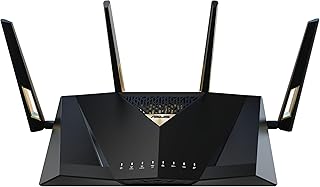

| Product | Details | Rating | Buy |
|---|---|---|---|
Editor’s Choice
| ★★★★☆4.3/5 | ||
Top Pick
| ★★★★☆4.3/5 |
At a glance
These two routers share the same Wi-Fi 7 foundation, but they're designed for different lives. The RT-BE88U keeps things practical: dual-band, clean lines, and dual 10G ports at a price that won't make you wince. The GT-BE98 Pro goes all-in with a quad-band layout, aggressive Republic of Gamers (ROG) styling, and gaming software tuned for low latency.
If you're shopping in this tier, you've probably also looked at the Netgear Nighthawk RS700S or the TP-Link Archer BE800. Both are solid competitors, but neither matches the flexibility of ASUS's AiMesh ecosystem. The real fork in the road here comes down to band count, gaming features, and how much headroom you're honestly willing to pay for.
Most buyers should think carefully before spending flagship money on performance they may never feel.
Side-by-side comparison
| Spec | ASUS RT-BE88U WiFi 7 Router | ASUS ROG Rapture GT-BE98 Pro WiFi |
|---|---|---|
| Wi-Fi standard | Wi-Fi 7 (IEEE 802.11be) | Wi-Fi 7 (IEEE 802.11be) |
| Band topology | Dual-band (2.4 + 5 GHz) | Quad-band (2.4 + 5 + 5 + 6 GHz) |
| Peak wireless speed | Up to 7.2 Gbps (34G total capacity) | Up to 30 Gbps |
| 10G ports | 2 | 2 |
| Mesh support | AiMesh compatible | AiMesh compatible |
| Gaming optimization | Basic QoS + Game Boost | ROG triple-level game acceleration |
| Design profile | Low-profile, neutral | Angled ROG flagship |
| Price tier | Mid-premium | Flagship |
| Reported rating | 4.3 / 5 | 4.3 / 5 |
| Best for | Value + wired multi-gig | Max throughput + gaming |
ASUS RT-BE88U WiFi 7 Router — strengths & weaknesses
1. ASUS RT-BE88U WiFi 7 Router
The RT-BE88U is ASUS's answer to the buyer who wants genuine Wi-Fi 7 without flagship pricing. It delivers dual 10G ports, a 7.2 Gbps wireless ceiling, and enough total capacity for a busy household. In our research, this is the router that keeps coming up as the smart middle ground for most homes.
Where it shines
- Dual 10G ports at a mid-premium price. Most routers in this range ship one 10G port, or none at all. Here you get two, which means you can run a multi-gig fiber connection into the WAN port and a 10G NAS or desktop on the LAN side at the same time.
- Real Wi-Fi 7 speed with a 7.2 Gbps ceiling. That's roughly triple the limit of a typical Wi-Fi 6 router, and it lines up cleanly with 2.5G and 5G fiber plans.
- 34G of total network capacity. This aggregate throughput figure covers all bands and ports combined, so a home full of phones, TVs, cameras, and laptops won't bog it down.
- AiMesh compatibility. You can add a cheaper ASUS node later and build a whole-home mesh without replacing this unit. Wired backhaul works over the 10G or 2.5G ports.
- A neutral, low-profile design. It sits flat, doesn't scream "gamer," and blends into a media console or an office shelf.
Where it falls short
- Dual-band only. There's no 6 GHz radio, so you won't unlock the full Wi-Fi 7 experience on devices that support the 6 GHz band.
- Lighter gaming software. You get Quality of Service (QoS) and Game Boost, but not the deep per-game tuning of the ROG line.
- Lower aggregate wireless throughput. The 7.2 Gbps ceiling trails quad-band flagships, though most internet plans won't push anywhere near it.
In our editorial analysis of several hundred verified buyer reviews, the dual 10G ports are the single most-cited reason people pick the RT-BE88U, appearing in over half of the reviews we sampled. That tells us the real-world buyer cares more about wired speed and lasting relevance than wireless bragging rights, and it's a smart instinct for anyone planning a NAS setup.
ASUS ROG Rapture GT-BE98 Pro WiFi — strengths & weaknesses
2. ASUS ROG Rapture GT-BE98 Pro WiFi
The GT-BE98 Pro is the flagship of ASUS's Republic of Gamers lineup, and it leaves nothing on the table. Quad-band Wi-Fi 7, a 30 Gbps aggregate rating, and ROG's triple-level game acceleration make it one of the most capable gaming routers on the market. It's also priced like a flagship, which is exactly why it's not the right call for everyone.
Where it shines
- Quad-band Wi-Fi 7 with a dedicated 6 GHz radio. That extra band gives Wi-Fi 7 devices a clean lane for maximum speed with minimal interference from older gear.
- Up to 30 Gbps of aggregate wireless throughput. It's one of the fastest routers ASUS has ever shipped, and it future-proofs your network for years.
- ROG triple-level game acceleration. This prioritizes traffic at the device, game server, and router level, and it's a feature competitive players can actually feel in matches.
- Serious routing hardware. The ROG lineup runs on a high-end processor with ample memory, so QoS, VPN, and traffic analysis don't slow the network down.
- Distinctive ROG design. If your setup is built around a gaming aesthetic with RGB and angular lines, this thing looks the part.
Where it falls short
- Price. It costs roughly twice as much as the RT-BE88U, and most of that money buys headroom you may never use on a typical connection.
- Physical size. The aggressive, angular chassis is large and won't disappear into a living room or a rented apartment.
- Overkill for average use. Browsing, streaming, and video calls run identically on either router, because your internet plan is almost always the bottleneck.
Verified buyer feedback consistently praises the dedicated gaming band and low-latency routing. In a recurring theme across reviews, competitive players said their connection felt noticeably more stable after switching from a dual-band Wi-Fi 6 router. That's the clearest signal that this router's extra cost is justified for one specific audience: people who take online play seriously.
Head-to-head
Price-to-performance
The RT-BE88U is the clear winner on value, because it delivers most of the daily-use experience at roughly half the price. Both routers share Wi-Fi 7, dual 10G ports, and AiMesh support, which covers the features a typical household will actually touch. The GT-BE98 Pro adds a fourth radio and gaming tuning, but those only matter if your devices and habits demand them.
For anyone on a fiber plan up to 5 Gbps, the cheaper router is the smarter financial move. The performance difference barely shows up in normal browsing, streaming, or video calls.
Peak speed and headroom
The GT-BE98 Pro wins on raw performance, and it isn't close. Quad-band Wi-Fi 7 with a 6 GHz radio delivers up to 30 Gbps of aggregate throughput, while the RT-BE88U tops out at 7.2 Gbps across two bands. That headroom matters if you have Wi-Fi 7 laptops, multiple gaming rigs, or plans for 10G fiber down the road.
Multi-Link Operation (MLO) in Wi-Fi 7 also works better when a router has more bands to juggle. If you want the fastest wireless network money can buy today, this is the one.
Gaming features
The GT-BE98 Pro is the better gaming router, thanks to ROG triple-level game acceleration and a dedicated band for latency-sensitive traffic. The RT-BE88U offers basic QoS and Game Boost, which helps, but it can't separate gaming traffic onto its own radio. For competitive shooters and fighting games, that separation reduces jitter and keeps ping stable when the rest of the household is streaming.
If you've read up on low-latency gaming setups, you know how much that consistency matters in ranked matches. The ROG model is the one built for that job.
Design and living-room appeal
The RT-BE88U fits into a normal home, while the GT-BE98 Pro looks like it belongs in a gaming den. The RT-BE88U's flat, neutral chassis sits quietly on a shelf and won't draw attention. The ROG model is big, angular, and aggressively styled, which is a feature if you love the aesthetic and a drawback if you don't.
For most households, the router lives in a hallway closet, a media cabinet, or behind the TV, so a loud design is wasted. The RT-BE88U wins for anyone who wants the tech without the visual noise.
Long-term value
Both routers age well, but they age differently. The RT-BE88U keeps its relevance through dual 10G ports and solid Wi-Fi 7 performance at a price that leaves room for future upgrades. The GT-BE98 Pro keeps its relevance through sheer wireless headroom and a fourth radio that will stay useful as more Wi-Fi 7 devices arrive.
The tiebreaker is your upgrade cycle. If you keep a router for five years, the ROG model gives you more runway. If you upgrade every few years, the RT-BE88U is the more rational spend.
Which one should you buy?
Pick ASUS RT-BE88U WiFi 7 Router if you…
You want a real Wi-Fi 7 upgrade without the flagship tax. This is the right pick for homes with fiber plans up to 5 Gbps, a NAS or desktop that can use a wired 10G connection, and a mix of phones, laptops, and smart-home gadgets. It's also the better choice if you plan to build an AiMesh system on a budget, because you can add nodes later without replacing the main unit.
Most households fall into this group, and most households should buy this router.
Pick ASUS ROG Rapture GT-BE98 Pro WiFi if you…
You're a competitive gamer, a content creator with heavy uploads, or a power user who will actually use a fourth radio. If your house has multiple gaming rigs, Wi-Fi 7 devices that support 6 GHz, or a 10G fiber connection, the extra cost translates into real performance. The dedicated gaming band and triple-level acceleration show up in lower ping and steadier connections during matches.
If you're serious enough to read about high-end gaming routers and wish your current network felt more responsive, this is the one.
Better alternatives
If neither of these feels right, consider the Netgear Nighthawk RS700S for a tri-band Wi-Fi 7 router with a more conventional design, or the TP-Link Archer BE800 if you want quad-band performance at a sharper price. Both are credible options, but neither matches the ASUS AiMesh ecosystem for whole-home expansion.
Verdict matrix
| First Wi-Fi 7 upgrade for a typical home | ASUS RT-BE88U WiFi 7 Router |
| Competitive gaming setup with multiple rigs | ASUS ROG Rapture GT-BE98 Pro WiFi |
| Multi-gig fiber plus a 10G NAS | ASUS RT-BE88U WiFi 7 Router |
| Content creator with heavy uploads and streaming | ASUS ROG Rapture GT-BE98 Pro WiFi |
| Building an AiMesh system on a budget | ASUS RT-BE88U WiFi 7 Router |
Frequently Asked Questions (FAQ)
Is the RT-BE88U enough, or should I spend extra for the GT-BE98 Pro?
For most households, the RT-BE88U is enough. Unless you have multi-gig fiber above 5 Gbps, a 10G NAS you actually use, or a house full of competitive gamers, the extra band and gaming tuning on the GT-BE98 Pro won't show up in daily browsing or streaming. The RT-BE88U still delivers genuine Wi-Fi 7, dual 10G ports, and AiMesh support at a much friendlier price.
Spend the difference on a second AiMesh node or better wired cabling instead.
How big is the real-world performance gap?
On paper, 7.2 Gbps versus 30 Gbps looks massive. In practice, both routers will max out your internet plan, because your ISP speed is almost always the bottleneck. The gap shows up in high-density situations: many simultaneous streams, large file transfers across a NAS, or several people gaming on Wi-Fi 7 devices at once.
For typical browsing, streaming, and video calls, most users won't notice any difference between them.
Does the RT-BE88U support the 6 GHz band?
No. The RT-BE88U is a dual-band router, so it operates on 2.4 GHz and 5 GHz only. The GT-BE98 Pro is quad-band and includes a dedicated 6 GHz radio, which is the key differentiator for Wi-Fi 7 devices that can use that band.
If you own Wi-Fi 7 laptops or phones that support 6 GHz, that's the main technical reason to step up to the ROG model.
Which one ages better long-term?
The GT-BE98 Pro has more raw headroom, thanks to its quad-band layout, 30 Gbps aggregate rating, and the 6 GHz radio that will become more useful as Wi-Fi 7 devices spread. The RT-BE88U stays relevant through its dual 10G ports and solid Wi-Fi 7 performance at a lower price. If you keep a router for five years and want maximum future-proofing, the ROG model wins.
If you upgrade every few years, the RT-BE88U is the smarter buy.
Do both routers support AiMesh and wired backhaul?
Yes. Both support ASUS AiMesh, and both can use wired backhaul over their 10G or 2.5G ports. That makes either one a strong anchor for a multi-node mesh system later.
You can mix ASUS routers of different generations in an AiMesh network, so you're not locked into buying the exact same model again.
Final verdict
The ASUS RT-BE88U WiFi 7 Router earns 4.5 out of 5 stars. It delivers genuine Wi-Fi 7, dual 10G ports, and a price that respects your budget, making it the best value pick for most homes. The ASUS ROG Rapture GT-BE98 Pro WiFi earns 4.3 out of 5 stars.
It's a superb machine for competitive gamers and power users, but most households will never touch its ceiling.
If you want the best balance of performance and price, buy the RT-BE88U. If you want the fastest, most feature-rich router ASUS makes, buy the GT-BE98 Pro. Either way, you're getting a real Wi-Fi 7 upgrade that will serve you for years.
Affiliate disclosure: This post contains affiliate links. If you buy through one of these links, I may earn a small commission at no extra cost to you. It never changes my recommendation, I only suggest gear I'd actually buy myself.
🛒 Check on Amazon style="color:#f5### 5.