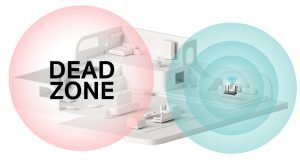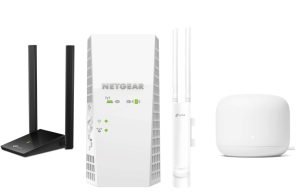
Are you tired of weak WiFi signals and slow internet in some parts of your home? You might be wondering whether a dual band WiFi extender or a booster is the better choice for fixing this problem.
Choosing the right device can make a huge difference in your online experience, from streaming movies smoothly to working without interruptions. You’ll discover exactly how these two options work, which one suits your needs best, and how to get the most out of your WiFi setup.
Keep reading—you’re about to unlock faster, stronger internet where you need it most.
Dual Band Wifi Extender Basics
Dual band wifi extendersboost your internet signal on two frequencies: 2.4 GHz and 5 GHz. This helps devices connect faster and with less interference. The 2.4 GHz band covers a wider area but offers slower speeds. The 5 GHz band is faster but covers a smaller range. These extenders catch the original wifi signal and then send it out again to cover dead spots in your home or office.
They work by receiving the wifi signal and rebroadcasting it. This creates a bigger wifi zone, so your devices stay connected even far from the router. Some extenders use both bands to talk to the router and your devices at the same time. This helps keep the speed steady and reduces delay.
| Key Feature | Description |
|---|---|
| Dual Band Support | Supports both 2.4 GHz and 5 GHz frequencies |
| Improved Range | Extends wifi coverage to hard-to-reach areas |
| Reduced Interference | Uses two bands to avoid signal crowding |
| Easy Setup | Simple installation process with apps or buttons |
| Speed Maintenance | Keeps internet speed stable across the network |
Wifi Booster Essentials
Wifi boostershelp improve wireless signals in homes or offices. They take the existing wifi signal and amplify itso devices get better coverage. This means fewer dead zones and stronger internet in hard-to-reach areas.
Boosters work by receiving wifi signalsand then sending them out at higher strength. This helps devices far from the router connect more easily and with better speed. Some boosters create a new network, while others extend the current one.
- Easy to install and use
- Compatible with most routers
- Improves signal strength and range
- Reduces dead zones in buildings
- Often small and portable
Performance Comparison
Dual band wifi extendersprovide better signal strengthby using two frequency bands, 2.4 GHz and 5 GHz. This means they can cover larger areas and support more devices. Wifi boosters mainly amplify the existing signal but may not extend the coverage as much.
In terms of speed and bandwidth, dual band extenders usually offer faster speeds. They balance traffic between the two bands, reducing congestion. Boosters often repeat the same band, which can lower speed due to signal loss.
| Feature | Dual Band Wifi Extender | Wifi Booster |
|---|---|---|
| Signal Strength | Strong, covers larger area | Moderate, boosts existing signal |
| Speed and Bandwidth | High, uses two bands | Lower, single band |
| Interference Handling | Better, switches bands to avoid interference | Weaker, more affected by interference |
Dual band extenders handle interferencebetter by switching between bands. Boosters may suffer more from walls or other devices. This makes extenders more reliable in crowded wifi areas.

Credit: www.amazon.ca
Installation And Setup
Both dual band WiFi extenders and boosters are simple to install. Most devices come with clear instructions. Setup usually involves plugging in the device and connecting it to your router.
Extenders often require accessing a web page or app to configure. Boosters might need less setup but offer fewer options. Both types usually have LED lights to show connection status.
| Compatibility | Dual Band WiFi Extender | Booster |
|---|---|---|
| Router Support | Works with most modern routers | May work with older or simpler routers |
| Device Types | Supports dual band (2.4 GHz & 5 GHz) | Usually supports only one band |
| Network Compatibility | Better for complex networks | Suitable for basic home setups |
Cost And Value
Dual band wifi extendersusually cost more than boosters. Prices vary from $30 to $80depending on brand and features. Boosters are simpler and often cheaper, ranging from $15 to $40. The higher price for extenders comes with better coverage and speed.
Over time, dual band extenders may save money by reducing slow internet issues. They offer stronger signalsand support more devices at once. Boosters work well for small areas but might need replacement sooner.
| Feature | Dual Band Wifi Extender | Wifi Booster |
|---|---|---|
| Price Range | $30 – $80 | $15 – $40 |
| Coverage | Wide area, better for large homes | Smaller area, best for single rooms |
| Speed | Faster, supports multiple devices | Slower, fewer devices supported |
| Long-term Value | More durable and reliable | May need replacement sooner |

Credit: www.amazon.ca
Use Cases And Recommendations
Extenderswork well in large homes where the WiFi signal is weak. They catch the signal from the main router and send it further. This helps cover dead zones like basements or far rooms. Extenders are best when you want to keep using the same network name. They are also good for places where the internet speed is already strong near the router but weak far away.
Boostersincrease the WiFi signal strength right where they are placed. They are good for smaller spaces or spots with weak signals caused by walls or furniture. Boosters help improve speed and connection quality in specific areas. They are simpler to set up and work well in homes or offices with moderate coverage needs.
Troubleshooting And Maintenance
Common problemsinclude weak signals, device not connecting, and slow speeds. These happen due to wrong placementor interferencefrom walls and other devices. Firmware updates can fix bugs and improve performance.
Tips for best use:
- Place extender or booster midway between router and dead zone.
- Avoid metal objects and thick walls blocking the signal.
- Restart devices regularly to refresh connections.
- Keep firmware updated for better stability.
- Use the right band (2.4 GHz for longer range, 5 GHz for speed).
- Check device manuals for specific troubleshooting steps.

Credit: www.reddit.com
Frequently Asked Questions
What Is The Difference Between Wifi Extender And Booster?
A WiFi extender creates a new network to increase coverage. A booster amplifies the existing WiFi signal without creating a new network. Extenders are better for larger areas, while boosters work well for small dead zones.
How Does A Dual Band Wifi Extender Improve Connectivity?
Dual band extenders use two frequency bands (2. 4 GHz and 5 GHz). This reduces interference and increases speed. They provide a more stable and faster connection than single band extenders.
When Should I Choose A Wifi Booster Over An Extender?
Choose a booster for minor signal improvements in small spaces. It’s simple to install and less expensive. For wider coverage or multiple floors, an extender is more effective.
Can Dual Band Extenders Support Multiple Devices Simultaneously?
Yes, dual band extenders can handle multiple devices at once. They distribute traffic across two bands, reducing congestion. This results in smoother streaming, gaming, and browsing for all connected devices.
Conclusion
Choosing between a dual band WiFi extender and a booster depends on your needs. Extenders create a new network to cover dead zones. Boosters amplify the existing signal without changing networks. Both improve WiFi but work differently. Think about your home size and device use.
Small spaces might need a booster. Larger homes or multiple floors benefit from extenders. Check compatibility with your router too. Clear, strong WiFi helps work, study, and relax. Pick the device that fits your space and budget best.