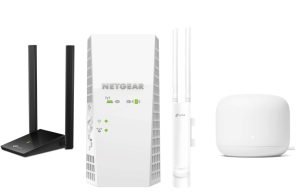
Are you struggling to get your printer to work with your tri-band WiFi extender? You’re not alone.
Connecting devices like printers to extenders can feel tricky, but it doesn’t have to be. In this guide, you’ll find simple, step-by-step instructions that make the process clear and hassle-free. By the end, you’ll have your printer connected and ready to print from anywhere in your home or office.
Keep reading, and let’s solve this together.

Credit: www.ebay.com
Tri Band Wifi Extender Basics
A Tri Band Wifi Extenderuses three separate wifi bands to boost internet signals. Two bands connect to your main router. The third band sends wifi to your devices. This setup helps reduce traffic and makes your connection faster and more stable.
Benefits of Using a Tri Band Extenderinclude:
- Improves wifi coverage in large areas.
- Reduces signal dropouts and slow speeds.
- Supports many devices at once without lag.
- Makes streaming and gaming smoother.
- Easy to set up with most routers.

Credit: www.amazon.ca
Preparing Your Printer
Start by checking if your printer supports wireless connections. Most modern printers work with WiFi extenders, but some older models might not.
Look for WiFi or network settings in the printer manual or on the printer screen. Confirm that it can connect to a tri-band WiFi extender’s network.
Next, update the printer’s firmware. Firmware is the software inside your printer that controls its functions. Updates fix bugs and add new features.
Visit the printer manufacturer’s website and download the latest firmware version. Follow the instructions to install it safely.
Keeping the firmware up to date ensures better compatibility and smoother connection with your WiFi extender.
Setting Up The Wifi Extender
Place the wifi extender near your router but not too close. The signal should be strong enough to reach the area where you want better coverage. Avoid walls or large metal objects that can block the signal.
Once positioned, plug in the extender and power it on. Wait for the lights to show it is ready to connect.
- Use your phone or computer to find the extender’s wifi network.
- Connect to this network to open the extender’s setup page.
- Enter your main router’s wifi name and password.
- Save the settings and let the extender connect to your router.
- Watch for a solid light to confirm a strong connection.
Connecting Printer To Extender
Press the WPS buttonon your tri-band wifi extender. Then, press the WPS buttonon your printer within two minutes. The devices will connect automatically. This method is quick and does not need a password.
For manual setup, go to the printer’s control panel. Select the wifi setupoption. Choose the network nameof your tri-band extender. Enter the wifi passwordcarefully. Confirm the connection. The printer will connect to the extender’s wifi.
Troubleshooting Connection Issues
Resetting devices often fixes many connection problems. Start by turning off your printer and tri-band WiFi extender. Wait for about 30 seconds to clear temporary issues. Turn on the WiFi extender first and wait until all lights are stable.
Then, power on the printer and try to connect it again. This process helps refresh network settings and clear minor glitches. Sometimes, the devices may not connect due to IP conflicts or weak signals.
- Make sure the printer is within the extender’s range.
- Check if the WiFi extender is properly connected to the main router.
- Confirm the printer uses the correct WiFi network name (SSID).
- Restart the main router if the extender doesn’t connect.

Credit: www.youtube.com
Optimizing Printer Performance
To keep your printer running smoothly, a stable connectionto the tri-band WiFi extender is vital. Place the extender close to both the router and printer to reduce signal loss. Check signal strength regularly to avoid interruptions. Use the extender’s dedicated 5GHz bandfor faster and more reliable printing.
Regular maintenance helps avoid common issues. Clean printer heads and paper trays often. Update printer drivers and extender firmware to fix bugs and improve performance. Restart the extender and printer if connection drops. Keep the area around devices free from dust and interference.
- Place extender near printer and router
- Use 5GHz band for printing
- Clean printer parts regularly
- Update drivers and firmware
- Restart devices when needed
- Keep devices dust-free and clear
Frequently Asked Questions
How Do I Connect My Printer To A Tri Band Wifi Extender?
To connect, first link your printer to the extender’s WiFi network. Use the printer’s control panel to select the extender’s SSID. Enter the password if prompted. Ensure the extender is properly synced with your main router for seamless connection.
Can I Use A Tri Band Extender For Wireless Printing?
Yes, a tri band extender supports wireless printing by extending your WiFi range. It maintains strong signal strength, allowing your printer to connect without interruptions. This setup ensures better print job reliability in larger spaces.
What Is The Best Way To Configure Printer Settings For Wifi Extender?
Access your printer’s network settings and select the tri band extender’s WiFi name. Enter the correct password and confirm the connection. Restart your printer and check the connection status to ensure it is properly linked.
Will Connecting To A Tri Band Extender Affect Print Speed?
No, connecting through a tri band extender typically does not reduce print speed. The dedicated frequency bands minimize interference and maintain fast data transfer, ensuring your print jobs complete quickly and efficiently.
Conclusion
Connecting your printer to a tri-band WiFi extender can be simple. Follow the steps outlined to ensure a seamless setup. First, ensure your extender is properly configured. Then, connect your printer to the WiFi network. This boosts your printing range and convenience.
Troubleshooting steps help resolve any issues quickly. Enjoy hassle-free printing from anywhere in your home. Following these tips ensures a smooth connection. You can now print documents with ease. Happy printing and enjoy enhanced connectivity!