Are you struggling with slow Wi-Fi in your 2000 sq ft home? You might be wondering if a two-node mesh system is enough to keep every corner connected.
Choosing the right Wi-Fi setup can feel confusing, but it doesn’t have to be. Imagine seamless internet that reaches every room without dead zones or buffering. This article will help you understand if two nodes can cover your space effectively and what factors to consider before making a decision.
Keep reading to find out how to get the best Wi-Fi experience for your home.
Why Choose A Mesh System

Credit: www.amazon.ca
Factors Influencing Coverage
Choosing the right mesh system depends on many factors. Coverage is not only about square footage but also about other elements that affect signal strength.
This guide explains key factors that influence whether a two-node mesh system can cover a 2000 sq ft house well.
House Layout And Walls
The shape and materials of your house affect Wi-Fi signals. Walls and floors can block or weaken the coverage.
- Thick walls made of concrete or brick reduce signal strength.
- Open floor plans allow signals to travel farther.
- Multiple floors may need additional nodes for better coverage.
- Metal doors and mirrors can reflect Wi-Fi signals, causing dead zones.
Interference From Electronics
Many devices can interfere with Wi-Fi signals. This interference can limit how far the mesh system reaches.
| Device | Type of Interference | Effect on Wi-Fi |
| Microwaves | Radio waves | Signal disruption near kitchen |
| Bluetooth Devices | Frequency overlap | Slower connections |
| Wireless Phones | Radio signals | Signal drops |
| Cordless Cameras | Signal noise | Reduced coverage area |
Device Density And Usage
The number of devices and how they use the network changes coverage needs. More devices require stronger and wider Wi-Fi coverage.
- High device density can cause network congestion.
- Streaming and gaming use more bandwidth than browsing.
- Smart home devices add constant background traffic.
- Two nodes may struggle if many devices connect at once.
Two Node Mesh System Basics
A two node mesh system uses two devices to spread Wi-Fi signals. One device connects to the modem. The second device extends the signal farther.
This setup helps cover larger homes by reducing dead spots. It creates a single network name for easy connection.
Typical Coverage Area
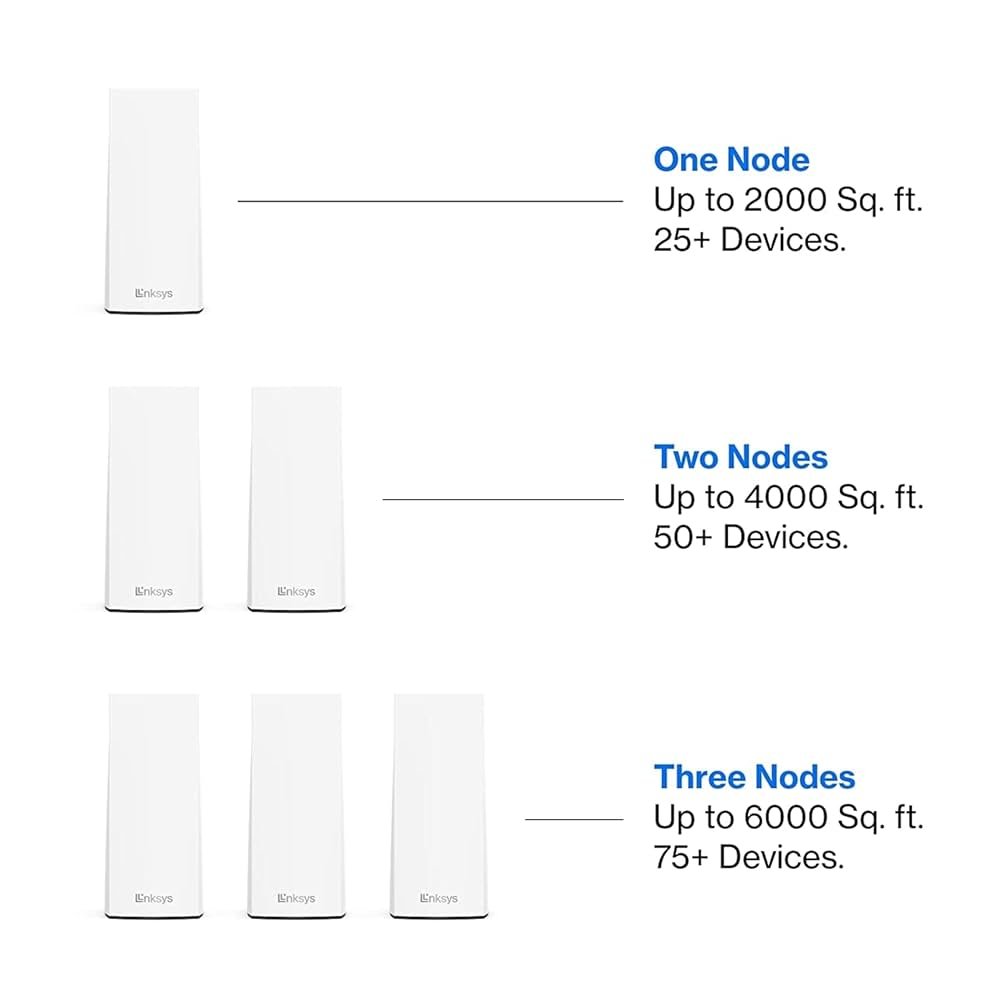
Two node mesh systems usually cover 3,000 to 4,000 square feet. This depends on walls and other obstacles.
For a 2,000 square foot house, two nodes often provide good coverage. They work well in most layouts without many thick walls.
- Open floor plans allow signals to travel farther
- Walls and floors can reduce range
- Devices near large metal objects may lose signal strength
Setup And Placement Tips
Place the first node near your modem or router for the best signal. The second node should be halfway between the first node and the farthest room.
Avoid placing nodes near thick walls, metal objects, or electronics that cause interference. Higher spots often improve coverage.
- Keep nodes in open spaces, not inside cabinets
- Place nodes where you use the internet most
- Test signal strength after setup and adjust positions if needed
Assessing Coverage For 2000 Sq Ft
Choosing the right mesh system depends on your home’s size and layout. A 2000 square foot house needs good signal coverage in all rooms. Two node mesh systems can cover this size but need careful placement.
This article looks at signal strength expectations and where dead zones might appear. Understanding these can help you decide if two nodes are enough for your home.
Signal Strength Expectations
Two nodes usually provide strong Wi-Fi signals in a 2000 sq ft house. The main node connects to your modem, and the second node extends the signal to farther rooms. Expect good speeds near each node.
- Strong signal within 50 feet of each node
- Speeds may drop slightly in rooms between nodes
- Walls and floors reduce signal strength
- Open floor plans get better coverage
Dead Zones And Weak Spots
Dead zones are areas with little or no Wi-Fi signal. Two nodes might not reach every corner of a 2000 sq ft house, especially with many walls or large furniture blocking signals.
| Cause | Effect on Signal |
| Thick walls | Signal weakens or stops |
| Multiple floors | Signal may not reach upstairs or downstairs |
| Metal objects | Signal interference and drops |
| Distance over 50 feet | Lower speeds and weak signal |
Performance Considerations
Choosing a two node mesh system for a 2000 sq ft house depends on how well it performs. The size of the home and the layout can affect the signal strength and coverage.
Performance factors like speed, bandwidth sharing, latency, and stability play a key role. These factors determine how smoothly your devices connect and work.
Speed And Bandwidth Sharing
In a two node mesh system, speed depends on the connection between the nodes. If the link is strong, devices get good speeds.
Bandwidth is shared between all devices on the network. More devices using data at once can slow down your internet speed.
- Node placement affects signal strength and speed.
- Devices farther from a node get slower speeds.
- Heavy internet use lowers available bandwidth.
Latency And Stability
Latency means the delay before data starts moving. Low latency is important for video calls and gaming.
A two node system can be stable if the nodes have a clear line of sight. Walls and floors can cause interruptions.
- Good node placement reduces latency.
- Obstacles can cause signal drops and instability.
- Stable connections improve overall user experience.

Credit: dongknows.com
When To Add More Nodes
A two-node mesh system can cover many homes. But sometimes, coverage may not be enough.
Let’s explore when you might need to add more nodes for better connectivity.
Indicators Of Insufficient Coverage
Some signs show that your current mesh system isn’t covering your home well.
- Wi-Fi dead zones in certain rooms
- Slow internet speeds during peak hours
- Devices frequently disconnecting
- Streaming videos buffering too often
Benefits Of Additional Nodes
Adding more nodes can greatly improve your home’s Wi-Fi coverage and reliability.
| Benefit | Description |
| Improved Coverage | Eliminates dead zones |
| Better Speed | Faster connection for all devices |
| Stable Connection | Reduces disconnections |
| Enhanced Streaming | Smoother video playback |
Alternative Solutions
For a 2000 sq ft house, a two-node mesh system may not always be sufficient. Exploring other solutions can ensure strong internet coverage.
Consider high-powered routers or wired access points as alternatives to enhance your home network.
High-powered Routers
High-powered routers provide strong signals and can cover larger areas. They are designed to penetrate walls and extend reach throughout your home.
- Place the router in a central location for optimal coverage.
- Ensure the router firmware is up-to-date for best performance.
- Consider models with multiple antennas for better range.
Wired Access Points
Wired access points can be a reliable solution to extend your network. They use wired connections to deliver stable internet to different parts of the house.
Installing wired access points requires running cables. This may involve some effort, but it ensures a stable connection.
| Solution | Benefits |
| High-Powered Routers | Strong signal, covers larger areas |
| Wired Access Points | Stable connection, less interference |

Credit: www.amazon.ca
Frequently Asked Questions
Is A Two Node Mesh System Suitable For 2000 Sq Ft House?
Yes, a two node mesh system can cover 2000 sq ft effectively. It provides strong Wi-Fi signals and reduces dead zones in medium-sized homes.
How Many Nodes Are Ideal For 2000 Sq Ft House?
Typically, 2 to 3 nodes are ideal for 2000 sq ft homes. Two nodes cover most areas, but a third helps if there are many walls.
Can Two Node Mesh Handle Multiple Devices?
Yes, two node mesh systems handle multiple devices well. They distribute traffic efficiently, ensuring smooth internet for streaming, gaming, and smart home gadgets.
Does A Two Node Mesh Improve Wi-fi Speed?
A two node mesh system enhances Wi-Fi speed by reducing signal loss. It offers stable connections and faster speeds compared to single routers in large spaces.
Conclusion
A two-node mesh system can work well for a 2000 sq ft house. It offers good coverage and faster Wi-Fi in most rooms. Placement of nodes matters a lot for the best signal. Walls and furniture can affect the connection.
Adding more nodes might help in bigger or complex layouts. Think about your internet use and device count too. This setup balances cost and performance for many homes. Choose based on your space and needs for smooth internet access.