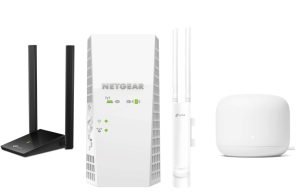
Are you struggling with weak WiFi signals in your large home? Wondering if a mesh WiFi system can truly cover a 5000 sq ft house without dead zones?
You’re not alone. Many people face frustrating internet drops and slow speeds just when they need connection the most. Imagine streaming your favorite shows, working from any room, or gaming online without interruptions—sounds perfect, right? This article will help you understand if mesh WiFi is the solution your big house needs and how to set it up for the best coverage.
Keep reading to find out how to turn your entire home into a strong, reliable WiFi zone.

Credit: www.amazon.ca
Mesh Wifi Basics
Mesh wifi helps cover large homes with strong internet signals. It uses multiple devices to spread wifi evenly.
This system works well in homes up to 5000 square feet. It reduces dead spots and keeps your connection steady.
How Mesh Systems Work
Mesh wifi uses several devices called nodes. These nodes talk to each other to share wifi.
One node connects to your modem. Other nodes are placed in different rooms. This creates a strong network everywhere.
- One main node links to the internet
- Other nodes spread wifi to hard-to-reach places
- Nodes work together to keep a steady signal
Key Components
Mesh systems have three main parts. Each part helps build a wide wifi coverage.
Understanding these parts helps you set up mesh wifi in your home.
- Main Node:Connects directly to your modem and controls the network.
- Satellite Nodes:Spread the wifi signal to different rooms.
- Software:Lets you manage the network and add new nodes easily.
Coverage Factors
Mesh WiFi systems can cover large areas, but many factors affect their reach. Understanding these factors helps you get the best signal in your home.
This guide explains how house layout, materials, and device placement impact mesh WiFi coverage for a 5000 sq ft house.
House Layout Impact
The shape and size of your house change how WiFi signals travel. Open floor plans allow signals to spread easily. Complex layouts with many rooms and floors can block signals.
- Multiple floors reduce signal strength between levels.
- Long hallways can weaken signal over distance.
- Rooms with many walls block WiFi waves.
- Open spaces help signals spread better.
Material And Obstacles
Building materials and objects inside your home affect WiFi signals. Some materials block signals more than others. Furniture and appliances also create obstacles.
| Material | Signal Impact |
| Wood | Low to moderate signal loss |
| Drywall | Low signal loss |
| Brick | Moderate to high signal loss |
| Concrete | High signal loss |
| Metal | Very high signal loss |
| Glass | Low to moderate signal loss |
Device Placement Tips
Place your mesh WiFi devices carefully to improve coverage. Good placement reduces dead zones and keeps your network fast.
- Place units in central, open areas of the house.
- Keep devices off the floor and away from walls.
- Avoid placing units near metal objects or appliances.
- Space units evenly to cover the whole area.
- Use higher locations to improve signal spread.
Mesh Wifi Capacity
Mesh wifi systems help cover large homes with strong internet signals. They use multiple devices called nodes.
Each node works together to spread wifi across the house. The capacity depends on the range of each node and how many nodes you use.
Range Per Node
Each mesh wifi node covers a certain area. Usually, a node can cover about 1,000 to 2,000 square feet.
The actual range depends on walls, floors, and other obstacles. More barriers can reduce the range.
- Open spaces allow nodes to cover more area
- Thick walls reduce the signal range
- Interference from other electronics can affect coverage
Number Of Nodes Needed
A 5,000 square foot house needs several nodes for full coverage. You divide the total area by the range of one node.
For example, if one node covers 1,500 square feet, you need at least four nodes.
- 5,000 ÷ 1,500 = 3.3, round up to 4 nodes
- More nodes improve speed and reduce dead zones
- Place nodes evenly for best coverage

Credit: www.reddit.com
Performance Expectations
Mesh WiFi systems aim to cover large areas like a 5000 sq ft house with good signal. Understanding their performance helps set realistic expectations.
Key factors include how fast the internet stays and how well it handles many devices connected at once.
Speed Consistency
Mesh WiFi keeps internet speed steady by using multiple nodes. This reduces dead spots in a big home.
- Nodes work together to cover all rooms.
- Speed may drop slightly as you move far from the main router.
- Obstacles like walls can lower signal strength.
- Good mesh systems balance speed across the whole area.
Handling Multiple Devices
Mesh networks share bandwidth well among many devices. This keeps connections stable for all users.
| Number of Devices | Performance Impact |
| 1-10 | Fast and stable connection |
| 11-30 | Good speed, slight slowdowns possible |
| 31-50 | Noticeable lag during heavy use |
| 50+ | High chance of congestion and slow speeds |
Setup Strategies
Mesh WiFi systems help cover large homes with strong internet signals. Setting them up right is key for good coverage in a 5000 sq ft house.
This guide covers how to place nodes and configure settings for the best results in big homes.
Optimal Node Placement
Placing mesh nodes correctly improves WiFi signal strength and speed. Nodes should be near areas with high internet use but not too far from each other.
- Place the main router near the center of the house.
- Put additional nodes in areas with weak WiFi or thick walls.
- Keep nodes within 30 to 50 feet of each other for good connection.
- Avoid placing nodes near microwaves or metal objects.
- Elevate nodes off the floor for better signal spread.
Configuring For Large Homes
Large homes need special settings to make the mesh system work well. Adjusting channels and bandwidth helps avoid interference.
| Setting | Recommendation | Reason |
| Channel Selection | Use auto or select least busy channel | Reduces interference from other networks |
| Band Steering | Enable 5 GHz preference | Faster speeds and less congestion |
| SSID Name | Use the same name for all nodes | Simplifies device connection |
| Firmware Updates | Keep all nodes updated | Improves security and performance |
Popular Mesh Systems
Mesh WiFi systems are great for large homes. They provide strong internet coverage across wide areas.
Many brands offer mesh systems that can cover a 5000 sq ft house. These systems ensure reliable connections in every room.
Top Brands For Large Coverage
Several brands are known for their excellent mesh WiFi systems. They offer products with extensive coverage for big homes.
- Netgear Orbi is popular for its wide coverage and fast speeds.
- Eero Pro offers easy setup and reliable performance.
- Google Nest WiFi combines smart features with strong coverage.
Cost Vs Performance
When choosing a mesh WiFi system, cost and performance are important. Some systems are more expensive but offer better features.
Consider your needs and budget. Some systems provide excellent performance at a lower cost.
| Brand | Approximate Cost | Performance Rating |
| Netgear Orbi | $300-$400 | High |
| Eero Pro | $200-$300 | Medium |
| Google Nest WiFi | $250-$350 | High |
Troubleshooting Coverage Gaps
Mesh WiFi can cover a large home, but sometimes there are gaps. These gaps can cause slow internet or no connection at all. Fixing these gaps is important for a smooth internet experience.
Understanding where the gaps are and how to fix them is key. There are several ways to improve your WiFi coverage in a 5000 sq ft house.
Signal Boosting Techniques
Boosting your WiFi signal can help fill coverage gaps. Placement of nodes and reducing interference are important.
- Place nodes high on shelves or mounts
- Avoid placing nodes near metal objects or microwaves
- Use a WiFi analyzer app to find weak spots
When To Add More Nodes
Adding more nodes can help if coverage gaps persist. It is important to know when and where to add them.
Consider adding more nodes if you have many devices or thick walls. It can improve the WiFi signal in hard-to-reach areas.
| Problem | Solution |
| Weak signal in basement | Add a node in the basement |
| No signal in backyard | Add a node near the back door |

Credit: www.amazon.ca
Frequently Asked Questions
Can Mesh Wifi Cover A 5000 Sq Ft House Effectively?
Yes, mesh WiFi can cover 5000 sq ft with multiple nodes. Proper placement ensures strong signals throughout large homes and reduces dead zones.
How Many Mesh Wifi Nodes Are Needed For 5000 Sq Ft?
Typically, 3 to 5 nodes cover 5000 sq ft efficiently. The exact number depends on house layout, walls, and interference sources.
Does Mesh Wifi Improve Speed In Large Houses?
Mesh WiFi enhances speed by distributing signal evenly. It reduces congestion and maintains faster connections across all areas of a large home.
Are Mesh Wifi Systems Better Than Range Extenders?
Yes, mesh systems provide seamless coverage and automatic node switching. Range extenders often cause slower speeds and require manual network changes.
Conclusion
Mesh WiFi can cover a 5000 sq ft house well. Placing nodes in key spots helps avoid dead zones. Each node boosts the signal, giving strong WiFi everywhere. Remember, thick walls or floors might need extra nodes. This system works better than a single router alone.
It keeps your connection steady as you move around. Choose a mesh system that fits your home size. This way, everyone enjoys fast and reliable internet. A good mesh WiFi setup solves coverage problems simply and smartly.