Are you worried that adding a long range WiFi extender to your home might spike your electricity bill? You’re not alone.
Many people wonder exactly how much power these devices use and whether they’re worth the extra cost. Understanding the electricity consumption of your WiFi extender can help you make smarter decisions about your home network and energy use. You’ll discover clear, simple answers about how much electricity a long range WiFi extender actually uses—and what that means for your wallet.
Keep reading to find out how to boost your WiFi without wasting energy.
Electricity Consumption Basics
Wifi extenders usually have power ratingsbetween 5 and 15 watts. This means they use a small amount of electricity compared to other home devices. Most long range wifi extenders fall near the 10-wattmark.
Energy use depends on the modeland features. Some extenders have extra antennas or higher speeds that may use more power. Basic models consume less electricity.
Wifi extenders run 24 hours a day, so their total energy use adds up over time. They usually consume between 0.12 and 0.36 kWh per day, which is low compared to other electronics.
| Device Type | Power Rating (Watts) | Daily Energy Use (kWh) |
|---|---|---|
| Basic Wifi Extender | 5 | 0.12 |
| Long Range Wifi Extender | 10 | 0.24 |
| High Performance Extender | 15 | 0.36 |
- Power ratings vary by model and features.
- Long range extenders use around 10 watts.
- Energy use is low compared to many home devices.
- Running 24/7 increases total consumption slightly.

Credit: www.amazon.ca
Factors Influencing Power Usage
Device specificationsgreatly affect power consumption. Some wifi extenders use more electricity due to bigger antennas or stronger chips. Smaller models often use less power but may cover less area.
Signal strength and rangealso impact energy use. Extenders pushing signals farther need more power. When placed near the main router, they consume less energy. Distance matters a lot.
Operational modeschange electricity use too. Some devices have sleep or low-power modes. These modes help save energy when not actively boosting signals. Continuous high-power use drains more electricity.
Comparing Energy Use With Other Devices
Routers usually use more electricitythan WiFi extenders. A typical router consumes around 6 to 15 watts. In contrast, long-range WiFi extenders use about 3 to 7 watts. This means extenders save energy while boosting WiFi signals.
Smart home devices vary a lot in power use. For example:
- Smart speakers use around 2 to 4 watts.
- Smart lights consume about 5 to 10 watts.
- Security cameras may use 4 to 10 watts.
| Device | Power Consumption (Watts) |
|---|---|
| Router | 6 – 15 |
| Long Range WiFi Extender | 3 – 7 |
| Smart Speaker | 2 – 4 |
| Smart Light | 5 – 10 |
| Security Camera | 4 – 10 |
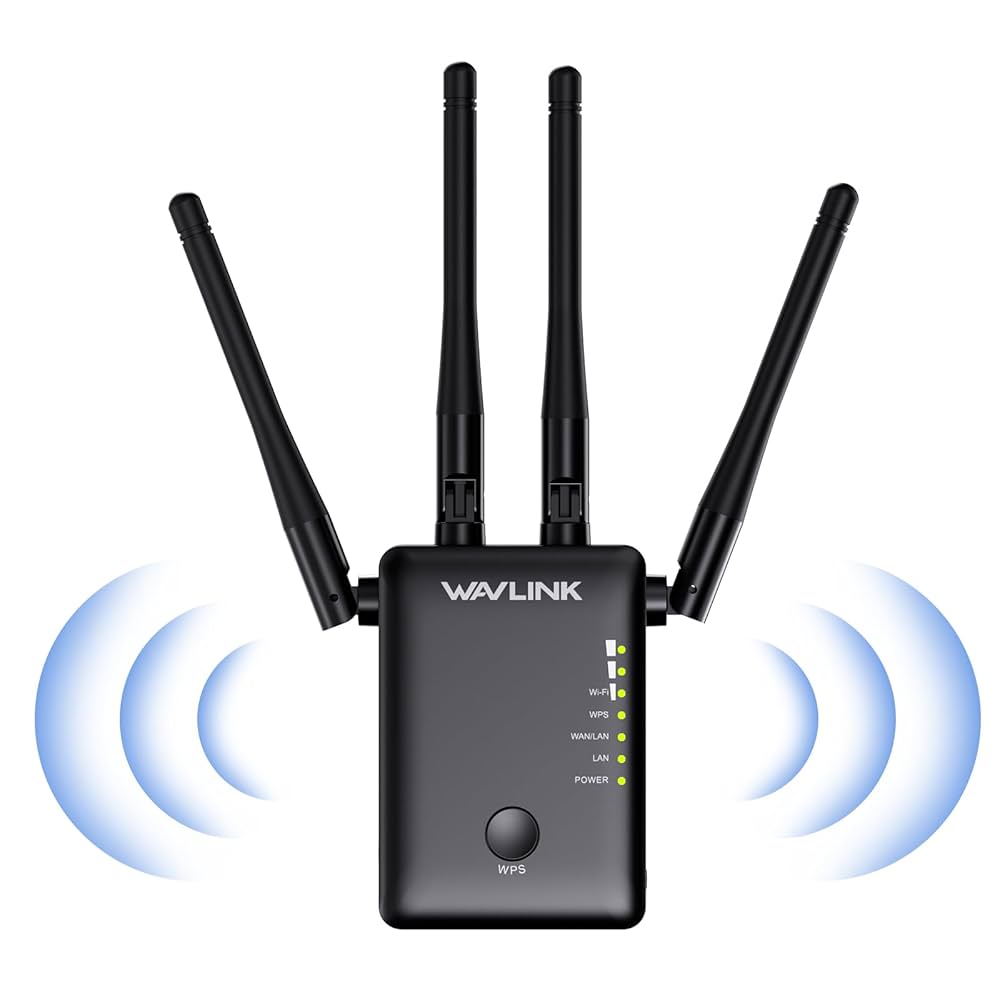
Credit: www.amazon.ca
Calculating Monthly And Yearly Costs
A long range wifi extender usually uses about 5 to 15 wattsof power. To find the monthly electricity use, multiply the wattage by hours used daily. For example, if it uses 10 watts and runs 24 hours a day:
- 10 watts × 24 hours = 240 watt-hours per day
- 240 watt-hours × 30 days = 7,200 watt-hours or 7.2 kWh per month
To get the yearly usage, multiply the monthly kWh by 12. So, 7.2 kWh × 12 = 86.4 kWh per year.
Electricity cost depends on the rate per kWh. For instance, if the rate is $0.12 per kWh:
| Time Period | Energy Used (kWh) | Cost at $0.12/kWh |
|---|---|---|
| Monthly | 7.2 | $0.86 |
| Yearly | 86.4 | $10.37 |
Energy-saving Tips For Wifi Extenders
Placing your WiFi extender in a central spothelps it use less power. Avoid walls and metal objects that block signals. Keep it near devices that need strong WiFi to reduce energy waste.
Use power management features to save electricity. Many extenders have sleep modeor auto turn-offduring low use. These features cut power when the extender is not needed. Check your extender settings to enable these options.
- Place extender in open areas for best coverage and low power use.
- Enable power-saving modes in the extender settings.
- Turn off extender during long periods of no use.
Choosing Energy-efficient Extenders
Energy-efficient wifi extenderssave power and reduce bills. Look for Energy Star certification. It means the device meets strict energy-saving rules. Devices with this mark use less power without losing performance.
Wi-Fi Alliance certificationensures the extender works well with other devices. It also means the product meets safety and quality standards.
| Brand | Power Consumption (Watts) | Energy Efficiency Rating | Certifications |
|---|---|---|---|
| Brand A | 5W | High | Energy Star, Wi-Fi Alliance |
| Brand B | 7W | Medium | Wi-Fi Alliance |
| Brand C | 10W | Low | None |
Choose extenders with lower power use and good certifications. This helps keep your home green and your electricity bills low.

Credit: www.amazon.ca
Frequently Asked Questions
How Much Power Does A Wifi Extender Consume?
A long-range WiFi extender typically uses between 2 to 20 watts. The exact consumption depends on the model and usage. Most modern extenders are designed to be energy-efficient. Always check the specifications for accurate power consumption details.
Is A Wifi Extender Energy-efficient?
Yes, many WiFi extenders are designed to be energy-efficient. They incorporate advanced technology to minimize power usage. Opting for energy-efficient models can help reduce electricity costs. Always look for extenders with energy-saving features.
Do Wifi Extenders Increase Electricity Bills Significantly?
WiFi extenders use minimal power, so they don’t significantly increase electricity bills. Most consume less than a light bulb. By selecting energy-efficient models, you can keep the electricity cost impact low. Regularly monitoring usage can also help manage costs effectively.
Can You Reduce A Wifi Extender’s Electricity Use?
Yes, you can reduce electricity use by turning off the extender when not in use. Additionally, placing it in an optimal location reduces the need for high power. Opt for models with power-saving modes to further cut down on electricity consumption.
Conclusion
A long range WiFi extender uses a small amount of electricity. It usually consumes less power than many household devices. This means it won’t add much to your electric bill. Choosing an energy-efficient model helps save more power. Keep your extender on only when needed.
This simple step reduces electricity use even further. Understanding power use helps you make smart choices. A good extender improves your WiFi without wasting energy. Small energy use, big WiFi coverage. That’s the balance to aim for.