Are you tired of slow Wi-Fi or dead zones in your small home? You might be wondering if investing in mesh Wi-Fi is really worth it.
After all, you want fast, reliable internet without breaking the bank or dealing with complicated setups. This article will help you understand exactly what mesh Wi-Fi can do for your space and if it’s the right choice for your needs.
Keep reading to discover how you can boost your home’s internet in a simple and effective way.
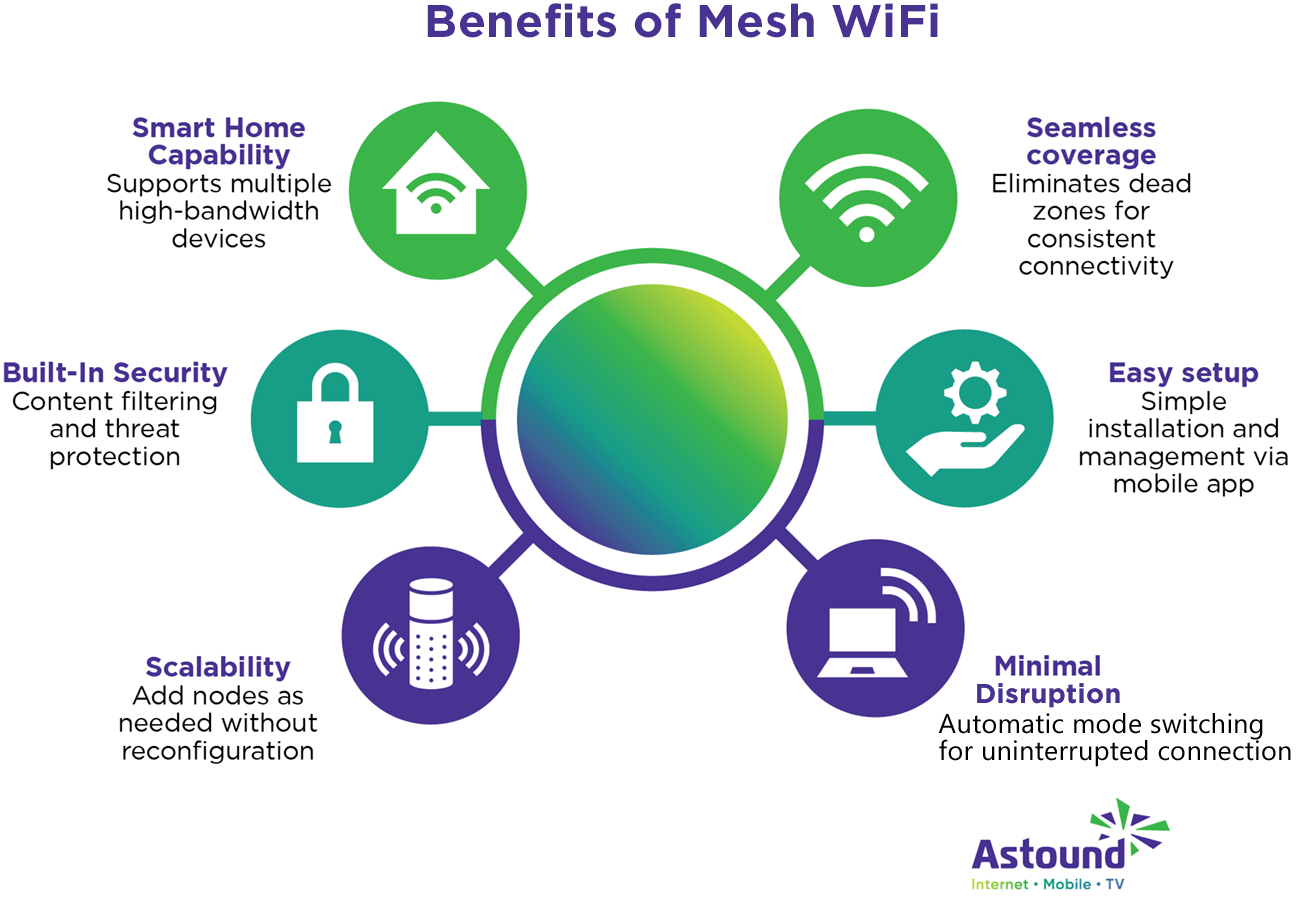
Credit: www.astound.com
Benefits Of Mesh Wifi
Mesh wifi systems help spread wireless internet evenly in small homes. They work by using multiple devices to cover every corner without weak spots.
This makes browsing and streaming smoother and more reliable for all devices in the house.
Seamless Coverage
Mesh wifi offers seamless coverage by connecting multiple nodes that share the internet signal. This stops dead zones and keeps your connection strong everywhere.
- Provides full home coverage without signal drops
- Allows moving freely without losing connection
- Supports multiple devices at once
Easy Setup
Setting up a mesh wifi system is simple. Most come with apps that guide you through each step clearly. This saves time and avoids confusion.
- Place the main router near the modem
- Connect additional nodes in other rooms
- Use the app to finalize and test the network
Scalability
Mesh wifi systems are easy to expand. You can add more nodes to cover larger areas or new spaces without replacing the whole system.
| Home Size | Recommended Nodes |
|---|---|
| Small (up to 1000 sq ft) | 2 nodes |
| Medium (1000–2000 sq ft) | 3 nodes |
| Large (2000+ sq ft) | 4 or more nodes |
Challenges In Small Homes
Small homes may face unique problems with WiFi coverage. Mesh WiFi can help but is not always the best fit.
Understanding these challenges helps decide if mesh WiFi is worth the cost and effort.
Signal Overlap
Mesh WiFi systems use multiple nodes to spread the signal. In small homes, the coverage areas of these nodes can overlap too much.
Too much overlap can cause interference and reduce WiFi speed instead of improving it.
Device Compatibility
Some older devices may not work well with mesh WiFi systems. They might struggle to connect or switch between nodes.
Check if your devices support mesh WiFi or newer WiFi standards before buying a system.
Cost Considerations
Mesh WiFi systems can be expensive. Small homes often do not need multiple nodes, making the cost less justifiable.
Sometimes a single strong router may provide enough coverage at a lower price.
Comparing Mesh With Traditional Routers
Choosing the right Wi-Fi system matters for small homes. Mesh networks and traditional routers offer different benefits. Understanding these can help you decide which fits your needs.
This article looks at how mesh and traditional routers compare in performance, range, and management features.
Performance Differences
Traditional routers send Wi-Fi signals from one device. Mesh systems use many nodes to spread the signal. This can improve speed and reduce dead zones.
- Traditional routers may slow down if many devices connect.
- Mesh networks balance traffic across nodes for steady speed.
- Mesh systems often handle multiple users better.
Range And Coverage
Small homes still need full Wi-Fi coverage. Traditional routers have limits in range. Mesh networks add points to cover more area without losing signal.
| Feature | Traditional Router | Mesh Network |
| Coverage Area | One device, limited range | Multiple nodes, wider range |
| Signal Strength | Weak at edges | Strong throughout home |
| Dead Zones | Possible in corners | Less likely due to nodes |
Management Features
Managing Wi-Fi is easier with good tools. Traditional routers have basic controls. Mesh systems offer apps and settings for easy use.
- Simple app controls for setup and monitoring
- Automatic updates to improve security
- Guest network options
- Device prioritization for faster speeds

Credit: www.pcmag.com
Factors To Consider Before Buying
Buying mesh WiFi for a small home needs some thought. It is not always the best choice for every situation.
Look at your home and internet needs to decide if mesh WiFi is right for you.
Home Size And Layout
Small homes usually have fewer walls and less space to cover. A simple router might be enough. But if your home has thick walls or many floors, mesh WiFi can help spread the signal better.
| Home Feature | WiFi Solution |
|---|---|
| Single floor, open layout | Standard router |
| Multiple floors | Mesh WiFi system |
| Thick walls or metal frames | Mesh WiFi or multiple access points |
Number Of Devices
Count how many devices connect to your WiFi. Phones, laptops, smart TVs, and smart home gadgets all use bandwidth. Many devices can slow down your network.
- If you have fewer than 10 devices, a single router may work.
- Between 10 and 20 devices, mesh WiFi improves connection.
- More than 20 devices usually need a mesh system for smooth speed.
Internet Speed Needs
Think about what you use the internet for. Streaming videos, gaming, or video calls need faster and steady speeds. Mesh WiFi can keep these activities smooth by reducing dead zones.
- Check your current internet speed plan.
- Match your plan speed with your home coverage needs.
- Choose mesh WiFi if you need better coverage and stable speeds.
Popular Mesh Wifi Systems For Small Homes
Mesh wifi systems help improve internet coverage in small homes. They use multiple devices to spread wifi signals evenly.
Choosing the right mesh system depends on your budget and performance needs. Here are some popular options to consider.
Budget-friendly Options
Budget-friendly mesh systems offer good coverage without high costs. They are easy to set up and work well for small spaces.
- TP-Link Deco M4: Affordable and reliable for basic internet use.
- Google Nest Wifi: Simple design and easy management via app.
- Amazon Eero 6: Supports fast speeds and has good range.
High-performance Models
High-performance mesh systems give faster speeds and stronger signals. They suit homes with many devices or heavy internet use.
| Model | Max Speed | Key Feature |
| Netgear Orbi RBK752 | Up to 4.2 Gbps | Tri-band wifi for less interference |
| Asus ZenWiFi AX (XT8) | Up to 6 Gbps | Wi-Fi 6 support for faster connections |
| Linksys Velop MX10 | Up to 5.3 Gbps | Wide coverage with mesh technology |

Credit: www.pcmag.com
Tips For Optimizing Mesh Wifi
Mesh Wifi can improve internet coverage in your home. It is especially helpful for small homes with multiple rooms.
To get the most from your Mesh Wifi, there are a few things you can do. Follow these tips to optimize your network.
Node Placement
Correct node placement is key to optimal performance. Nodes should be placed strategically around your home.
- Place nodes in open areas, not hidden by furniture.
- Ensure nodes are within range of each other for strong signals.
- Avoid placing nodes near electronic devices that may cause interference.
Firmware Updates
Keeping your firmware updated is important. Updates often fix bugs and improve performance.
Check regularly for updates through the manufacturer’s app or website. Set up automatic updates if available, so your system stays current without manual checks.
Network Security
Securing your network protects your data from threats. Simple security measures can make a big difference.
| Action | Benefit |
| Change default passwords | Prevents unauthorized access |
| Enable network encryption | Protects data transmission |
| Use guest network | Isolates main network from guests |
Frequently Asked Questions
What Is Mesh Wifi And How Does It Work?
Mesh WiFi is a system of multiple devices that spread WiFi evenly. It eliminates dead zones and improves coverage in small homes. Nodes communicate to provide seamless internet access throughout the house, making it ideal for consistent connectivity.
Is Mesh Wifi Better Than A Single Router?
Yes, mesh WiFi offers better coverage and reliability than a single router. It reduces dead zones and supports multiple devices efficiently. In small homes, it ensures stable connections in every room without signal drops.
How Much Does Mesh Wifi Cost For Small Homes?
Mesh WiFi systems typically cost between $100 to $300 for small homes. Prices vary by brand, number of nodes, and features. Investing in mesh WiFi often provides better value than frequent router upgrades.
Can Mesh Wifi Improve Internet Speed In Small Homes?
Mesh WiFi can improve speed by reducing interference and signal loss. It optimizes device connections and balances network traffic. While it doesn’t increase your internet plan speed, it ensures faster and stable connections indoors.
Conclusion
Mesh WiFi suits small homes needing strong, steady internet. It covers all corners without extra wires. Setup is simple and saves time. Speeds stay fast even with many devices. The cost is fair for better WiFi quality. Small homes benefit from fewer dead zones.
A mesh system grows with your needs. Better online work, games, and streaming follow. Mesh WiFi makes home internet easier and smoother. Worth thinking about for a hassle-free connection.